
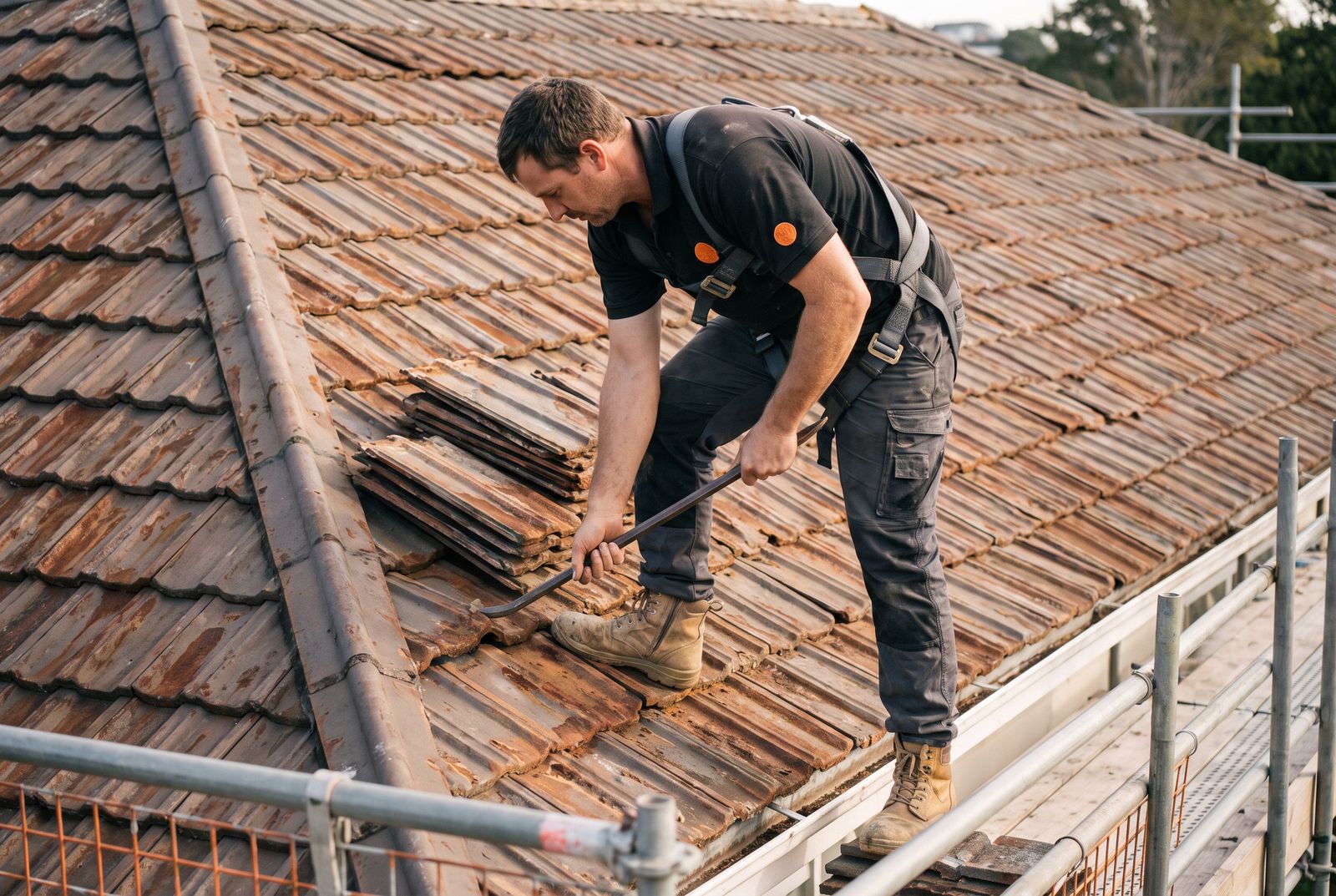
Finding out your roof might contain asbestos is unsettling, but it is common in older New Zealand homes and it is manageable. WorkSafe says that buildings built before 1 January 2000 probably contain some asbestos materials, and roofing is one of the usual places it turns up.
This guide explains how to tell whether your roof is likely to contain asbestos, what the WorkSafe rules actually say, whether you can remove it yourself, what affects removal cost, and whether painting or overlaying is an option. If replacement is where you end up, our asbestos roof replacement page explains how the work is run.
How can I tell if my roof contains asbestos?
You cannot confirm it by looking. The only certain way is a sample taken by a competent person and analysed by an IANZ-accredited laboratory, which is the route WorkSafe points to. Until then, treat an older fibre cement or bitumen-coated roof as if it does contain asbestos.
Some clues tell you a test is worth doing. WorkSafe's guidance on where asbestos is found lists Super Six and Super Eight roof sheeting, fluted ridge capping and asbestos cement vent pipes, and its August 2026 safety alert adds decramastic tiles installed before asbestos was phased out. Building plans and a council LIM report can also show what was used. Taking a sample yourself means breaking the material, which can release fibres, so leave that to the person doing the testing. A roof inspection can identify which parts of the roof are worth sampling.
- House built, extended or re-roofed before 2000
- Grey or off-white corrugated sheets that are hard and brittle rather than metal
- Fluted or moulded ridge capping and vent pipes on an older roof
- Older pressed metal decramastic tiles with a stone chip finish
Is a Super Six roof asbestos?
Many Super Six roofs do contain asbestos, but not all. Super Six is a corrugated fibre cement profile, older sheets were made with asbestos, and WorkSafe names it as one of the most common places asbestos is found in New Zealand homes. Later fibre cement sheets made without asbestos can look almost identical, which is why the test matters.
Super Six turns up on garages, sheds, carports and lean-tos as often as on main roofs. Suburbs built out with large state housing programmes from the late 1930s through the 1960s, such as Mt Roskill, Glen Innes and Manurewa, have plenty of houses and outbuildings of the right age, so it is worth checking every roofed structure on the section, not just the house.
Is it dangerous to live under an asbestos roof?
Generally not, if the roof is intact and left alone. WorkSafe explains that asbestos is relatively harmless while it is in a solid state; the risk comes when it is disturbed or damaged and fibres get into the air and are breathed in.
That makes the rules for living with one simple. Do not drill, cut, sand, walk on or water blast the sheets, and do not sweep or scrub them. Weathered sheets need more care, because the surface erodes over time, and WorkSafe publishes specific guidance on cleaning weathered asbestos roofing. Old asbestos cement sheets are also brittle and not safe to stand on, so the hazard is as much a fall through the roof as the fibres. If sheets are broken, cracked or crumbling, get advice rather than tidying up yourself.
Think your roof contains asbestos?
Cheeky's Roofers arranges testing, licensed removal and the WorkSafe notification, then re-roofs in steel, with removal and roofing priced separately.
What do WorkSafe's asbestos licensing rules require?
The Health and Safety at Work (Asbestos) Regulations 2016 set two removal licence classes and one threshold. A Class A licence covers any amount of friable or non-friable asbestos. A Class B licence covers any amount of non-friable asbestos, which is what most intact roofing sheets are. No licence is needed for up to and including 10 square metres of non-friable asbestos, counted cumulatively over the whole removal project for the site, although it must still be done safely with the right controls.
A whole roof is many times larger than 10 square metres, so roof removal is licensed work. The licence holder must give WorkSafe written notice at least five days before the work starts, or phone immediately and follow up in writing within 24 hours if removal has to happen urgently. After the work, a clearance certificate is issued: by a licensed asbestos assessor for Class A work, or by an independent competent person for Class B work.
| Work | Who can do it | Clearance after removal |
|---|---|---|
| Friable asbestos, any amount | Class A licence holder | Licensed assessor, with air monitoring |
| Non-friable asbestos over 10 m2 (whole project) | Class A or Class B licence holder | Independent competent person |
| Non-friable asbestos up to 10 m2 (whole project) | No licence needed, safe methods still required | Not set out for unlicensed work |
Can I remove an asbestos roof myself in NZ?
You should not, and for a whole roof it is not realistic. Health New Zealand's homeowner guidance notes that the Asbestos Regulations do not apply to work you do in or around your own home, but they do apply to anyone you engage, and it recommends limiting any work you do yourself to less than 10 square metres. Friable asbestos should only be removed by a WorkSafe licensed removalist.
WorkSafe's message to DIYers is blunter: people should definitely not try to remove asbestos themselves. It also notes that while it cannot step into private DIY projects, the Ministry of Health and local government can. Add the fall risk of working on brittle sheets, the protective equipment needed, and disposal only at an approved landfill, and a licensed removalist is the safer and usually simpler path.
How much does asbestos roof removal cost?
There is no official price, and we could not find a reliable independent New Zealand figure to quote, so get removal priced from a site visit. The cost depends on the roof area, how the sheets are fixed, access and height, whether the asbestos is friable, and how far the waste has to go.
When you compare quotes, check that each of these appears as a line: testing or survey, licensed removal including protective equipment and wetting, WorkSafe notification, waste wrapping and disposal at an approved site, the clearance certificate, and then the new roof. Cheeky's Roofers arranges the testing and licensed removal through WorkSafe licensed removalists and prices removal and re-roofing as separate lines, so you can see what the asbestos itself costs.
Can you paint or overlay an asbestos roof?
Painting is possible on sound sheets if the preparation is done safely, and overlaying is possible but needs building consent and simply moves the problem on to the next owner.
For painting, high-pressure water spraying over 350 kPa is prohibited on asbestos-containing material, and WorkSafe recommends a soft wash or chemical wash instead; a coating then helps seal the surface. It does not remove the asbestos, and it will not save a roof that is cracked or failing. For overlays, BRANZ lists roofing laid directly over an older roof such as asbestos-cement shingles among the situations that need a building consent, and the asbestos stays in place to be dealt with later.
For most worn-out asbestos roofs the lasting answer is licensed removal and a re-roof in steel. Cheeky's Roofers handles the testing, coordinates the removalist and notification, and installs the new roof once clearance is issued. If you suspect your roof contains asbestos, book a free measure and we will start with a test, not a guess.
Frequently Asked Questions
Do I have to tell buyers my roof contains asbestos?
If you know, it is sensible to disclose it, and many buyers will find out through a building report anyway. A lab result and a record of the roof's condition make the conversation easier. Get legal advice on your disclosure obligations before you sell.
Can I clean the spouting under an asbestos roof?
Take care. Debris in the spouting can include weathered fibre cement, so keep it damp, scoop rather than blast it out, and bag it. Do not climb onto or lean ladders against brittle sheets. If the roof is badly weathered, get the spouting cleared by someone trained to work with asbestos.
Do landlords have to manage asbestos in rentals?
Yes, when work is planned. WorkSafe treats the landlord as the business responsible for the rental, so before work that could disturb asbestos, such as re-roofing, the landlord must identify the asbestos in the affected area and prepare an asbestos management plan. A surveyor or assessor can help with the plan.
How long does licensed asbestos removal take?
Allow at least five days between booking and removal for the WorkSafe notice, plus testing time beforehand. Removal of a typical house roof is then usually quick, and clearance is needed before the new roof goes on. Your removalist will give you the timeline for your site.
Is a cracked asbestos roof an emergency?
Not usually, but do not leave it. Keep people off it, avoid disturbing any broken pieces, and get advice from a licensed removalist or roofer about making it safe. If fragments have come off in a storm, do not sweep or vacuum them with a household vacuum.
Our Services
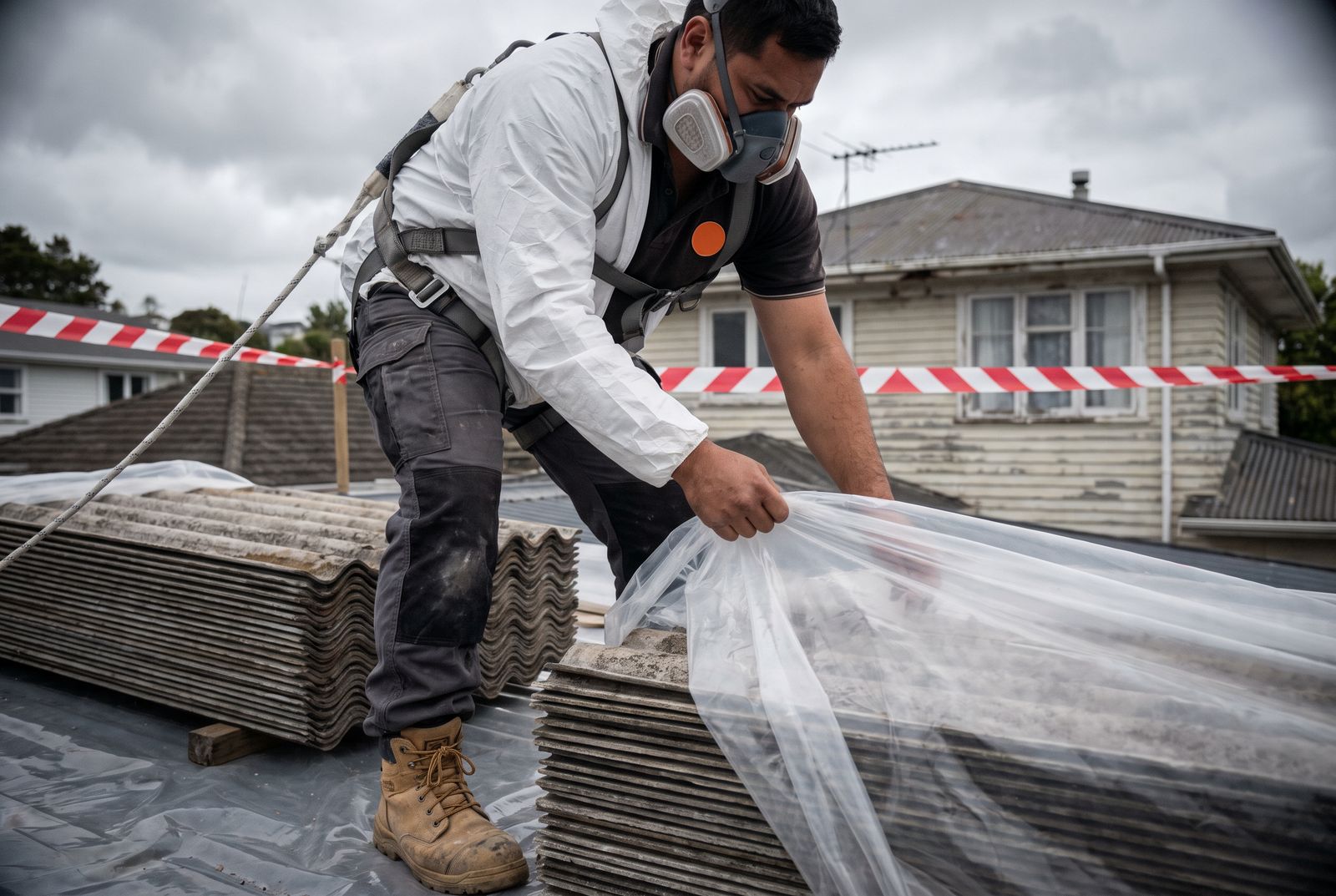 Asbestos Roof ReplacementOlder Super Six and fibre cement roofs can contain asbestos.
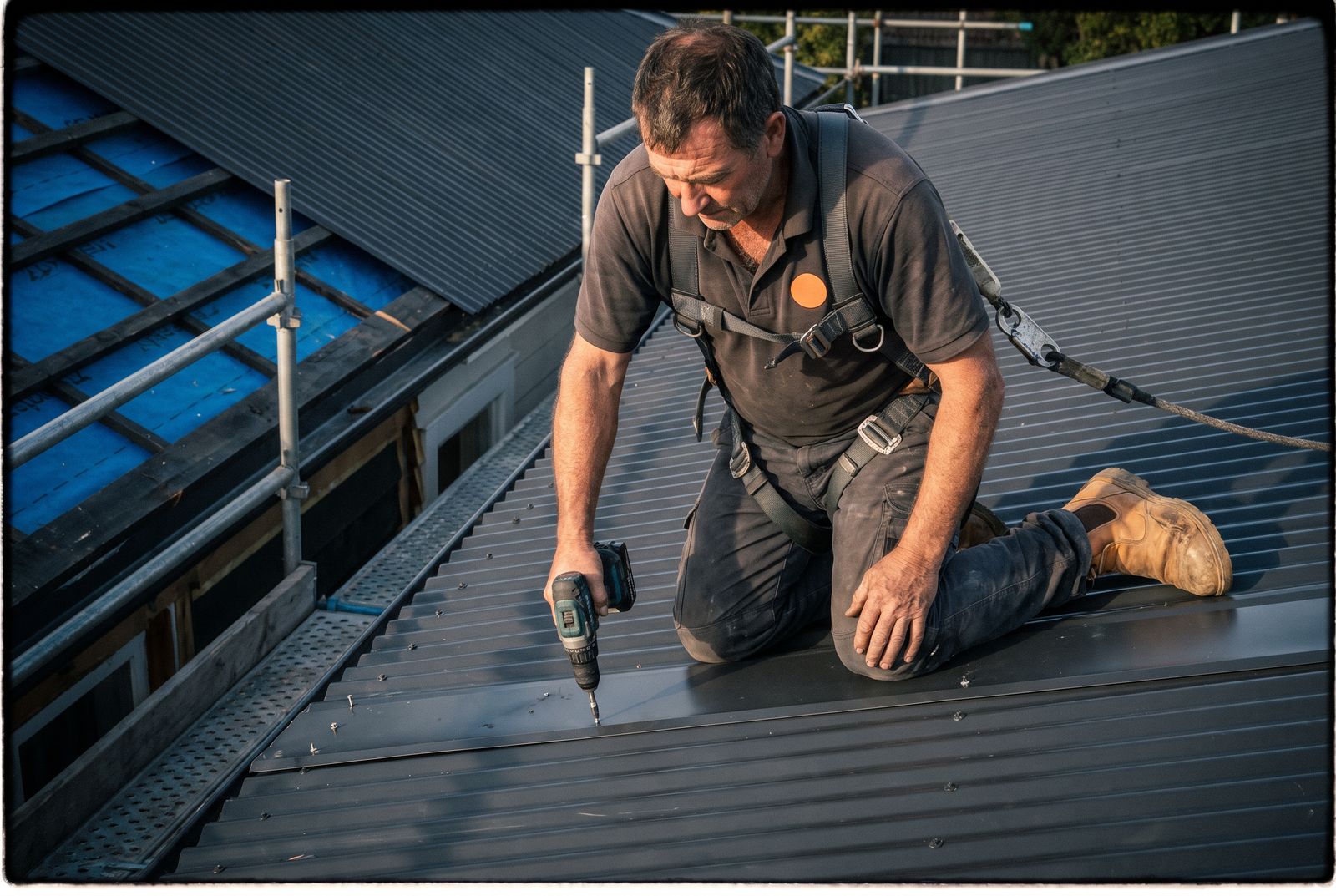 Re-RoofingA full re-roof replaces your old roofing, underlay and flashings with a new COLORSTEEL roof built to today's Building Code.
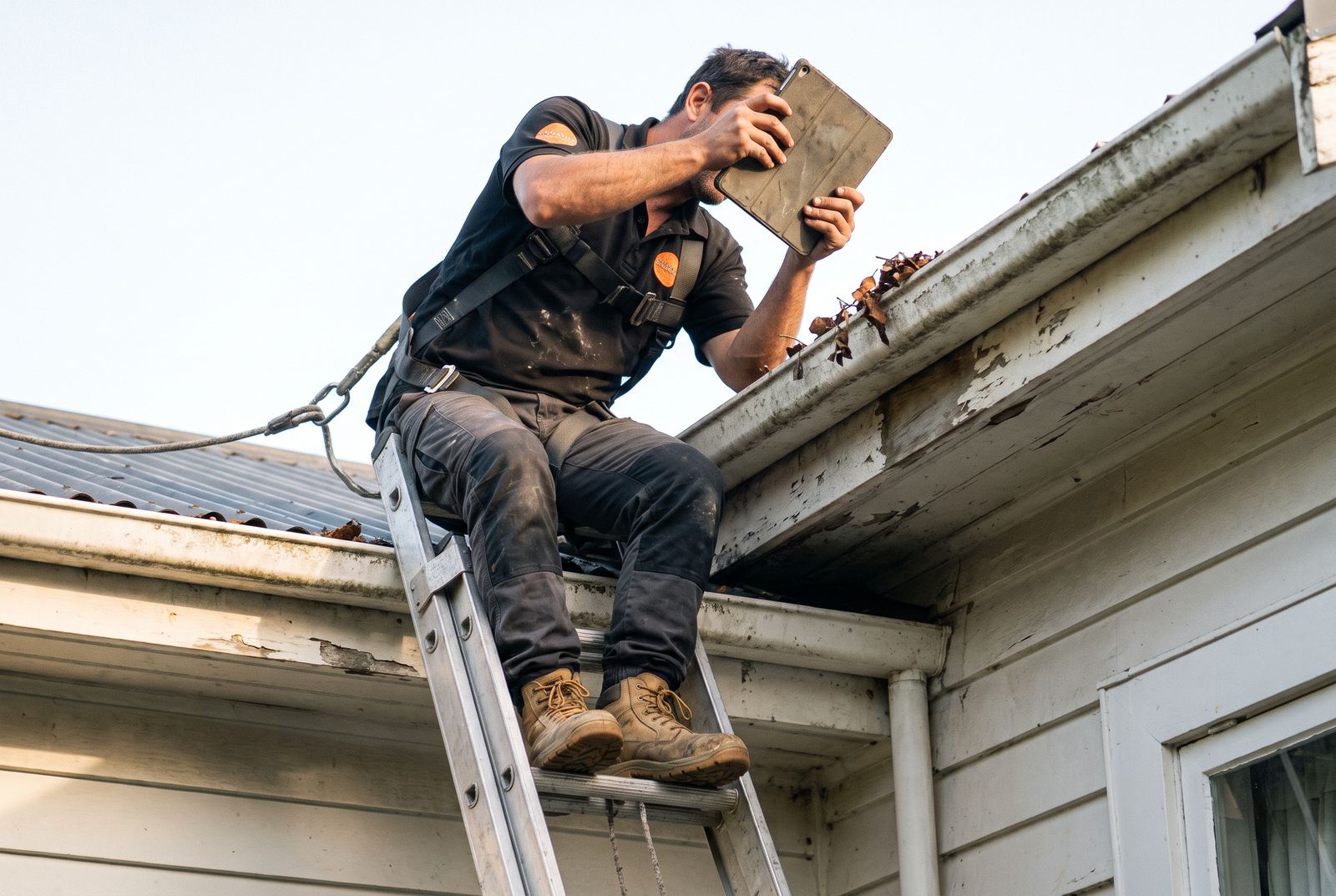 Roof InspectionsA detailed roof report with photos and honest repair or replace advice, for owners, buyers and insurers.
Read Next
Decramastic Roofs: Lifespan, Asbestos and Replacement Options
A decramastic roof is made of pressed steel tiles with a bitumen-based coating and a stone chip finish. It fails gradual...
Read article
How Much Does a New Roof Cost in NZ? (2026 Price Guide)
The Made 4 Tradies rates guide (September 2026) puts Auckland re-roofing at $95 to $150 per square metre and a full re-r...
Read article
How to Remove Moss and Lichen From Your Roof (NZ Guide)
The safest way to remove roof moss and lichen is to treat, wait and rinse: spray a moss and lichen treatment suited to y...
Read articleSources
- WorkSafe: Asbestos licensing overview (Class A, Class B and the 10 m2 threshold)
- WorkSafe: Duty to notify licensed asbestos removal
- WorkSafe: Where asbestos can be found
- WorkSafe safety alert (August 2026): Check for asbestos before high-pressure spraying on roofs
- Health New Zealand: Removing asbestos from the home (2023)