
Concrete tile roofs were a staple of Auckland building for decades. The tiles themselves are tough, but the systems that hold them in place wear out: ridge bedding cracks, fixings corrode, underlay goes brittle and tiles slip or break when someone walks on them. Many owners reach a point where another round of tile repairs no longer makes sense.
Converting from tile to longrun steel is one of the most common re-roofs we do. It is not quite the same as replacing steel with steel, because the roof gets much lighter and the structure has to be set up for a different kind of load. This page covers what changes, what it costs to get right, and how consent applies. For the general re-roofing process, see our re-roofing page.
Pricing: every roof gets a free on-site measure and an itemised written quote, with a fixed price agreed before any work starts.
Why owners switch from tiles to steel
The headline benefit is weight. A concrete tile roof is heavy, and taking that weight off the frame is good for the house. Steel roofs also have far fewer joins than a tiled roof, which means fewer places for water to get in, and longrun sheets can run from ridge to gutter in one length on most houses.
Maintenance is the other reason. A steel roof does not need ridges rebedded, broken tiles sourced or slipped tiles reset, and it can be walked on with care for future maintenance. If your tiles are generally sound and only one area is failing, though, tile roof repairs may still be the better first step.
- Much lighter roof load on the frame
- Fewer joins and laps for water to find
- No ridge bedding, pointing or loose tiles to maintain
- A wide choice of COLORSTEEL colours and profiles
Battens, purlins and wind uplift
This is the part that separates a good tile to metal job from a poor one. A heavy tile roof mainly has to hold weight up. A lightweight steel roof mainly has to stop the wind lifting it off. BRANZ guidance on replacing concrete tile roofs makes the point that uplift becomes the primary consideration, and that resistance depends on the connections between top plates and studs, rafters or trusses and the top plate, and purlins to the rafters.
In practice that means the closely spaced tile battens come off and new timber purlins go on at the spacing the steel profile needs, fixed to resist uplift for your wind zone. Where the existing rafter or truss connections are light, we add fixings. The NZ Metal Roof and Wall Cladding Code of Practice and NZS 3604 set the details we work to.
How It Works
Does tile to metal need building consent?
Schedule 1 of the Building Act exempts replacing a component with a comparable one in the same position. Whether a change from concrete tile to steel counts as comparable, and whether the structural work involved changes the answer, depends on the house. Work on structural elements and complete or substantial replacement of a specified system are excluded from that exemption.
Because of that, we do not assume either way. We assess the roof structure, then confirm with you, and with Auckland Council where needed, whether the job can proceed as exempt work or needs consent. If consent is required, the roofing is restricted building work carried out or supervised by a Licensed Building Practitioner, and the council issues a Code Compliance Certificate when it is signed off.
Noise, heat and how it looks
A common worry is rain noise. A steel roof laid over new roofing underlay with good ceiling insulation is not the drum many people expect. If you are replacing ceiling insulation, doing it while the roof is open is easy.
Steel can also suit a tiled-style home. Corrugate and trapezoidal profiles are most common, and colours range from dark greys that suit modern renovations to warmer tones that sit well on brick and tile-era houses. Browse the COLORSTEEL colours page and check a sample in daylight.
What affects the price
Tile removal adds labour and disposal compared with a steel-to-steel re-roof, and the new purlin layout adds timber and fixing time. Hipped tile roofs have more ridges and hips to flash than simple gables. Access, height and the steel product your environment needs also matter. Our re-roofing cost guide covers the factors, and the written quote after your measure is itemised so you can see the tile removal and structural work as separate lines.
Why Choose Cheeky's Roofers for Tile to Metal Re-Roofing
Structure checked first
We look at rafters, trusses and top plate connections before quoting, so uplift fixings are priced in, not discovered later.
New purlins, not old battens
Tile battens come off and purlins go on at the spacing your steel profile and wind zone need.
Clear consent advice
We tell you whether your conversion is exempt or needs consent, and why, before you sign.
Tiles removed responsibly
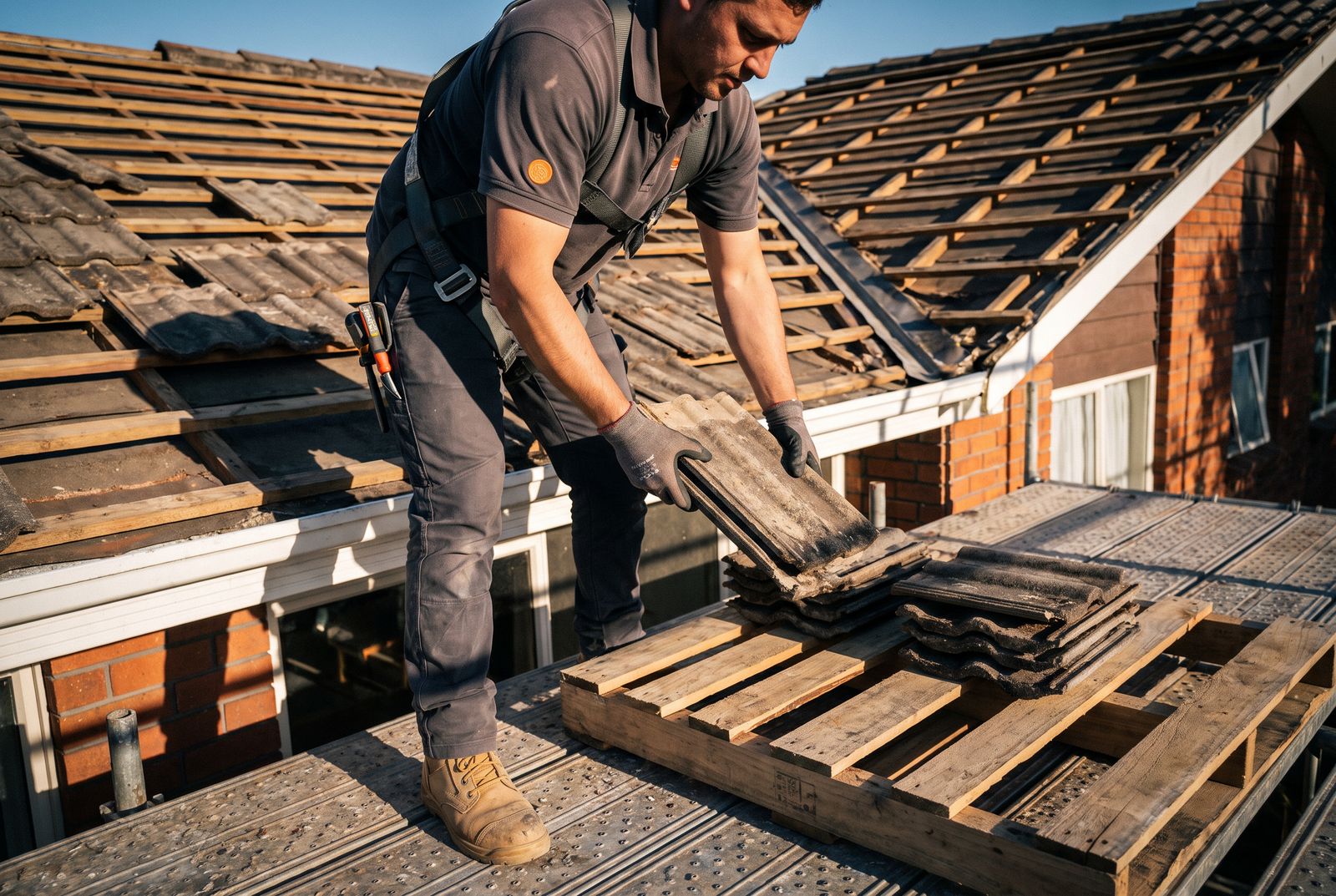
Old tiles are stacked, lowered and taken away, with the site left clean.
Tile to Metal Re-Roofing FAQs
Is a steel roof noisy in the rain?
Laid over new underlay with good ceiling insulation, most owners find it quieter than they expected. Rain is audible but not loud.
Do I need consent to change from tiles to steel?
It depends on the house and how much structural work is needed. We assess the roof and confirm whether the job is exempt or needs consent before quoting.
Can the existing tile battens be reused?
No. Tile battens are spaced for tiles. Steel roofing needs purlins at a different spacing, fixed to resist wind uplift.
Will the house need strengthening?
Taking weight off is good for the structure, but the roof must be held down against wind. We check the connections and add fixings where they are light.
What happens to the old tiles?
We remove them from site. Sound tiles are sometimes kept for other owners' tile repairs where practical.
Is metal tile an option instead of longrun?
Pressed metal tile systems exist and suit some homes. Most tile to metal conversions are to longrun COLORSTEEL, and we can discuss the trade-offs at the measure.
Tile to Metal Re-Roofing by Area
Local tile to metal re-roofing information for your part of Auckland:
Related Roofing Services
- Re-Roofing
- Roof Replacement
- Asbestos Roof Replacement
- Decramastic Roof Replacement
- Roof Repairs
- Roof Painting
Tile to Metal Re-Roofing Guides
- Concrete Tile vs Steel Roof: Which Is Better in NZ?
- How Long Does a Reroof Take? (and What If It Rains?)
- How Much Does a New Roof Cost in NZ? (2026 Price Guide)
- How Much Does COLORSTEEL Roofing Cost in NZ? (2026)
See the re-roofing cost guide or every service we offer.