
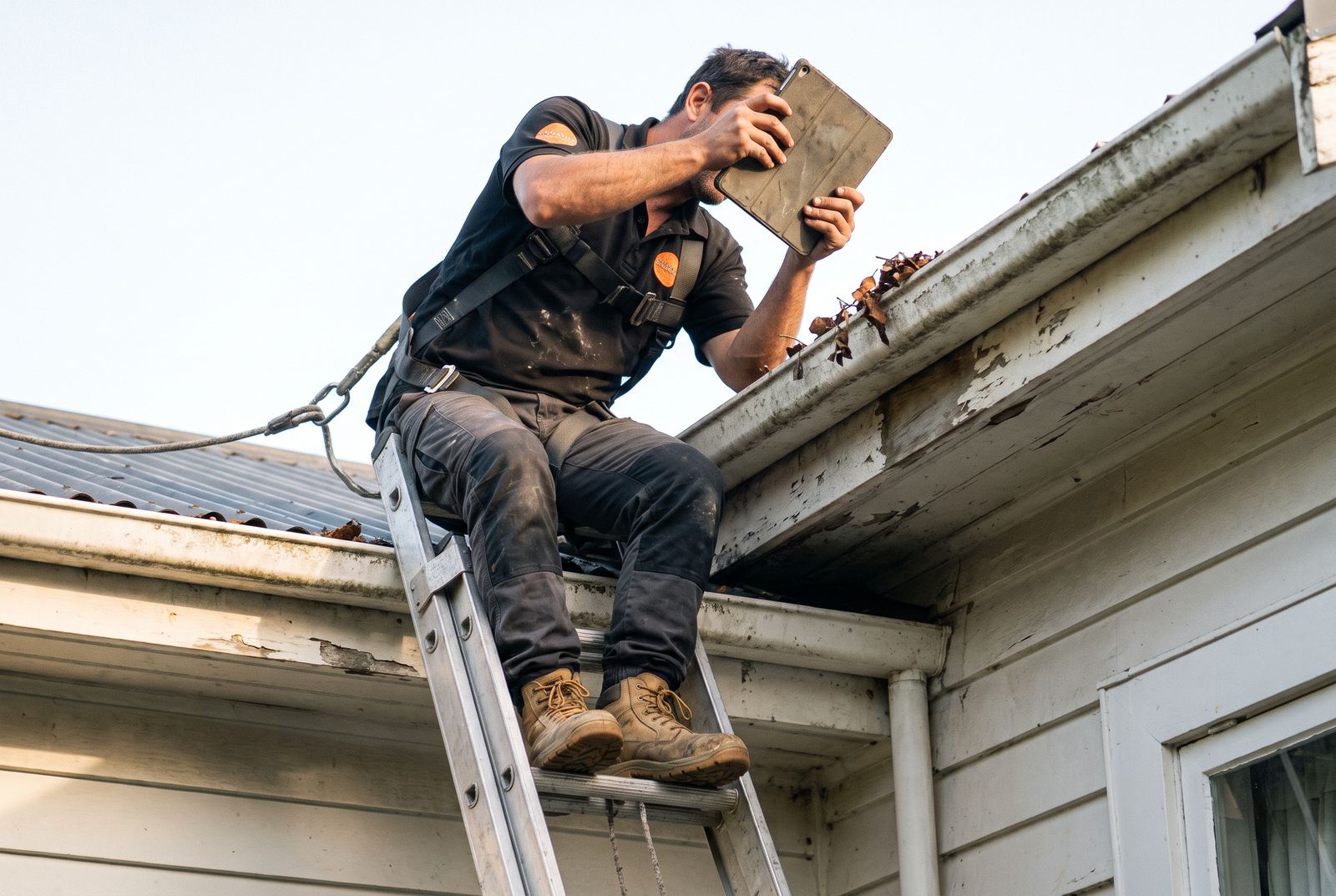
Moss and lichen look harmless, but they hold water against the roof, block spouting and valleys, and on older roofs they hide what is happening to the surface underneath. In Auckland's mild, damp climate, shaded roof faces can go green within a few years.
This guide explains the treat, wait and rinse method, why water blasting is the wrong tool for most roofs, how long treatments take, how often to treat, what affects the cost, and when to leave it to a professional roof cleaning and moss treatment service. It also covers the two rules people most often break by accident: the asbestos rule and the stormwater rule.
What is the best way to remove lichen from a roof?
Kill it first, then let it come away gently. Lichen grips the surface tightly, and scraping or blasting it off takes the coating or the chip with it. A biocide treatment kills the growth so it loosens over time and can be rinsed or weathered off without damaging the roof.
Do the preparation before any product goes on, because the runoff carries both chemicals and dead growth. Clear the spouting first so the runoff has somewhere to go, and check the downpipes are not blocked.
- If the roof is fibre cement or decramastic from before 2000, get it tested for asbestos before any cleaning.
- Disconnect any rainwater tank you drink from, and do not reconnect it until the roof has been rinsed by rain.
- Block or divert downpipes that run to the stormwater system so treated runoff goes onto unsealed ground or is captured.
- Cover plants under the eaves and keep pets and children away.
- Apply the treatment on a dry, still day, at the dilution on the label, using a low-pressure sprayer.
- Wait the time the label specifies, then rinse gently with a low-pressure hose and soft brush, or leave it for the rain.
Does moss damage a COLORSTEEL roof?
Yes, over time. Moss and lichen on a steel roof trap moisture, dirt and leaf litter against the paint, so the coating stays wet far longer than it would on a clean roof, and that is the condition corrosion needs. Growth also tends to collect at laps and around fixings, exactly where steel is most vulnerable.
COLORSTEEL's warranty assumes the roof is washed by rain, and it requires manual washing of areas that rain does not reach, at intervals that shorten as you get closer to the sea. Consumer NZ's general advice is to wash a steel roof every 3 to 12 months depending on the product and location, focusing on areas that are not rain-washed. Use a cleaner that is safe for pre-painted steel. Once the coating has chalked or worn through, cleaning alone will not restore it and roof painting becomes the next question.
Should you water-blast a roof?
Usually not. High pressure strips paint and stone chip, erodes the surface of concrete tiles, and drives water under laps, flashings and ridge capping where it causes leaks. It also flushes everything it removes straight into the spouting.
On a roof that contains asbestos it is not just a bad idea but against the law. WorkSafe says high-pressure water spraying, defined as over 350 kPa or 50 psi, must not be used on asbestos-containing material, with infringement fees of up to $9,000 and court fines of up to $30,000. Health New Zealand's guidance for homeowners is equally clear: never water blast an asbestos-cement surface; use low pressure and a soft brush.
Then there is the runoff. Auckland Council's guidance on pressure washing explains that under the Resource Management Act it is illegal to discharge wash water and contaminants such as moss, lichen and paint chips into the stormwater system, which flows straight to streams and the sea. Even biodegradable detergents are not allowed in.
Moss coming back every year?
Cheeky's Roofers treats moss and lichen with low-pressure methods suited to your roof, controls the runoff, and checks the roof while we are up there.
How long does moss treatment take to work?
Longer than most people expect, which is why the method is treat, wait and rinse rather than treat and scrub. The wait before rinsing is set by the product label, and the growth keeps dying back and loosening for some time after that.
Moss usually browns off first. Lichen is slower and its crusty residue can take much longer to weather away, sometimes after a second application on heavy growth. Rain does a lot of the work for free, so on many roofs the right approach is to treat, rinse gently once, and let the weather finish the job. Rinsing too early, or trying to force lichen off with pressure, is how roofs get damaged.
How often should a roof be treated for moss?
It depends far more on shade and trees than on the calendar. A sunny, open roof may stay clean for years, while a shaded face under trees can need treatment every couple of years.
Location matters in Auckland. In Titirangi and Glen Eden, high rainfall off the Waitākere Ranges, overhanging native bush and shaded sections keep roofs damp, and moss and lichen come back quickly. Mature trees on older sections in Mt Albert do the same on a smaller scale. Coastal homes need a different routine: salt builds up under eaves and on sheltered steel, so regular washing matters there even when moss is not the problem.
A simple habit works for most houses. Look at the roof and spouting each autumn, clear the gutters, and treat early growth before it takes hold, rather than waiting for a heavy clean.
How much does roof cleaning cost in NZ?
Roof cleaning is priced on the roof area and type, and we could not find an independent New Zealand price survey worth quoting, so treat any single online figure with caution. The quote you get should reflect the job in front of the cleaner, not an average.
The things that move the price are the size and pitch of the roof, how heavy the growth is, whether a return visit or second treatment is needed, height and access, the work needed to protect stormwater and gardens, and whether the gutters are cleared at the same time. A roof that might contain asbestos also needs testing first. Cheeky's Roofers prices cleaning after measuring the roof, and lists runoff control and any return visit as separate lines so you can see what you are paying for.
When should you call a roofer instead of doing it yourself?
Call a professional if the roof is steep, two storeys, fragile, or possibly asbestos, or if you are not comfortable working at height. Working on a roof is work at height, and a slip on a damp or treated surface can mean a fall from even a single-storey roof.
Fibre cement roofing such as Super Six is not safe to stand on and may contain asbestos, so it is never a DIY job. Decramastic tiles crack and dent underfoot. Even on a sound steel roof, treated surfaces can be slippery.
Cheeky's Roofers treats, cleans and checks roofs across Auckland, and a clean is also a good chance for a roof inspection, since we photograph anything that needs attention and tell you about it without pushing work you do not need. To get a price for your roof, book online and we will measure it.
Frequently Asked Questions
Can I use bleach on roof moss?
It is not a good idea. Household bleach is not formulated for roofs, can harm coatings, plants and waterways, and must not be washed into stormwater. A product made for moss and lichen on your roof type, used at the label dilution, is safer for the roof and the garden.
Will zinc strips stop moss growing?
Zinc or copper strips near the ridge are sold to slow regrowth as rain carries traces of metal down the roof. They are not a substitute for treatment, and dissimilar metals can react with some roofing, so check compatibility with your roofing manufacturer first.
Is moss on a concrete tile roof a problem?
It holds moisture against porous tiles, which speeds up surface erosion, and it blocks valleys and spouting. Treat it early. Do not water blast concrete tiles to remove it, because that erodes the surface faster than the moss does.
Can moss treatment harm my rainwater tank?
Yes, if the tank is still connected. Disconnect the supply before treatment and wait until rain has rinsed the roof before reconnecting, following the product label. If you drink from the tank, take particular care with the timing.
Should I clean my roof before painting it?
Always. Paint will not bond to moss, lichen, dirt or chalky coatings, so cleaning and treatment are the first stages of any repaint. If the roof might contain asbestos, test it first and use a soft wash rather than high pressure.
Our Services
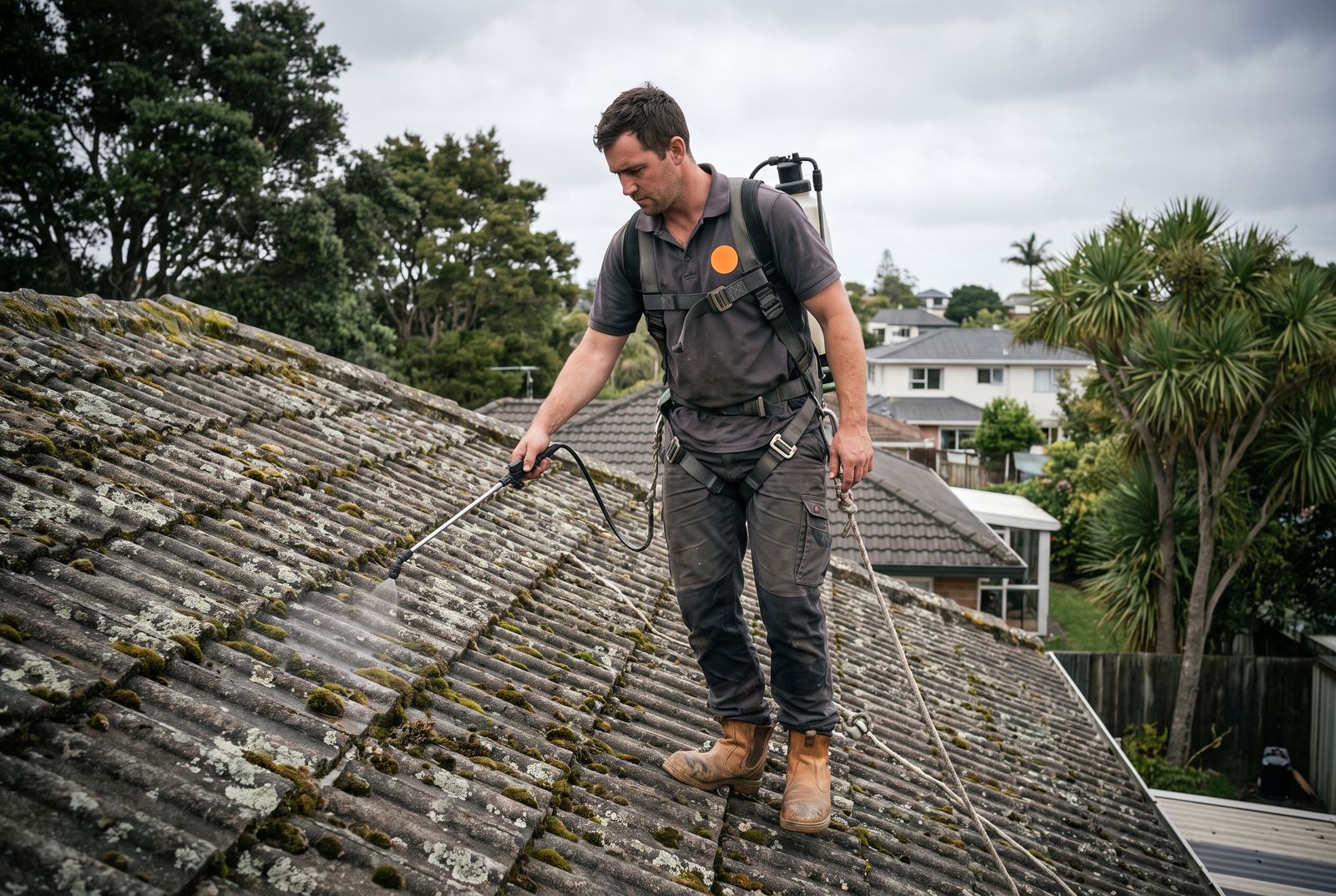 Roof WashingMoss, lichen and grime removed with the right treatment for your roof type, without damaging the surface.
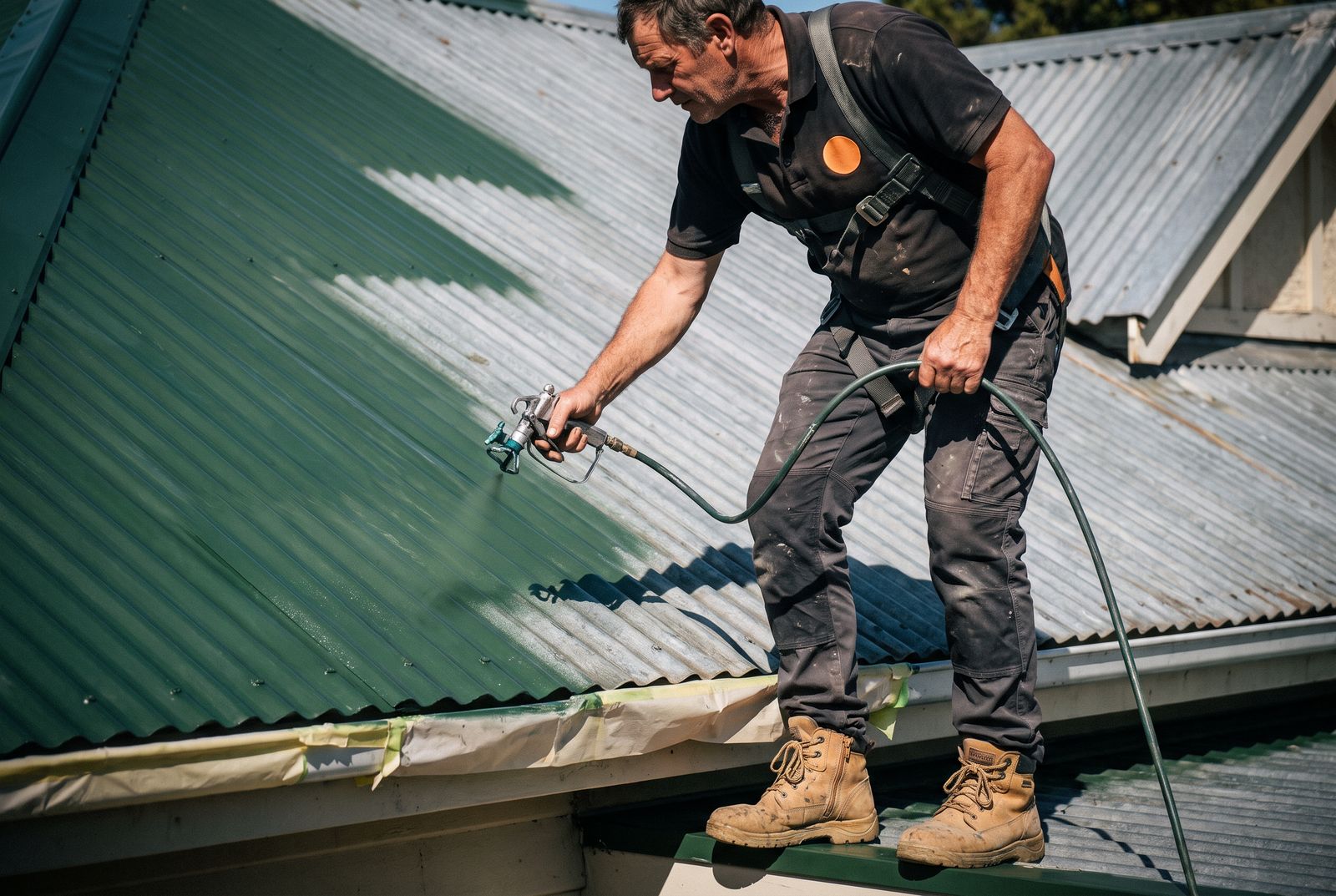 Roof PaintingRoof painting that starts with proper preparation: wash, treat, repair and prime, then two coats of roof paint.
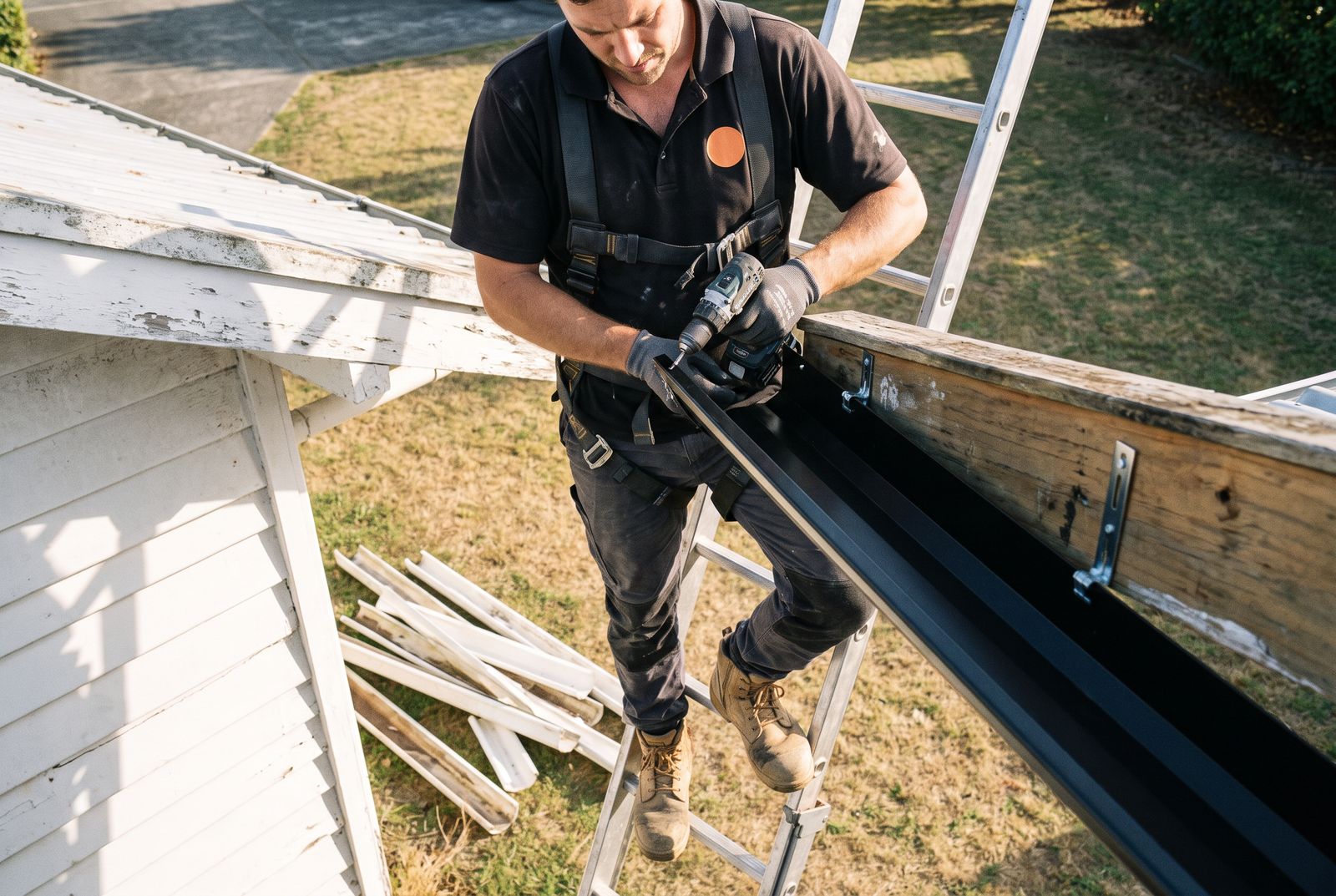 Spouting and GuttersNew spouting, gutter replacement and repairs in steel and PVC, sized to carry Auckland downpours.
Read Next
How to Clean Your Gutters Safely (and How Often)
The best way to clean gutters is by hand from a secure ladder: scoop out leaves and sludge, bag them, then flush each ru...
Read article
Decramastic Roofs: Lifespan, Asbestos and Replacement Options
A decramastic roof is made of pressed steel tiles with a bitumen-based coating and a stone chip finish. It fails gradual...
Read article
Asbestos Roofs in NZ: How to Tell, the Rules and Removal Cost
Any roof installed before 2000 could contain asbestos, most often Super Six fibre cement sheets and some decramastic til...
Read article