
Not every wet ceiling is a leak. In many Auckland homes the water comes from inside the house: warm, moist air from cooking, showers, drying clothes and breathing rises into the roof space, meets the cold underside of the roofing on a clear night and condenses. It then drips onto insulation and ceilings, stains timber and feeds mould. People often spend money chasing a leak that does not exist.
We assess roof spaces for condensation and heat problems and install ventilation that suits the roof: vented ridges, eave and soffit vents, ventilated battens and roof vents. Where the cause is a real leak, we say so and point you to the right fix instead. Ventilation is also worth planning into any re-roofing project, when it is easiest and cheapest to add.
Pricing: every roof gets a free on-site measure and an itemised written quote, with a fixed price agreed before any work starts.
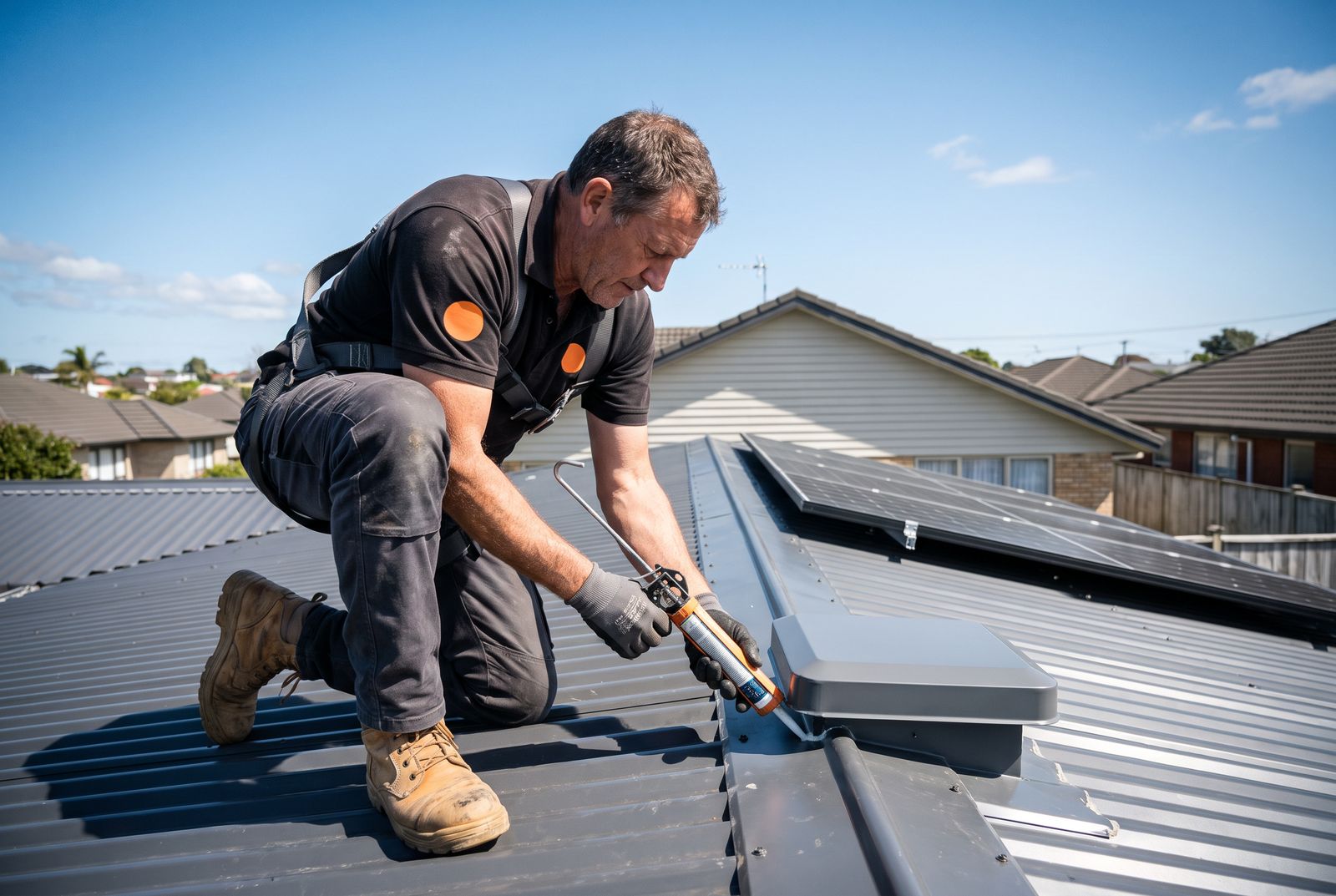
Signs your roof space needs ventilation
Condensation problems tend to be worst on cold, clear winter mornings and in rooms below bathrooms and kitchens. Common signs include:
- Water droplets or rust spots on the underside of steel roofing or on nail points
- Damp, compressed or stained ceiling insulation with no obvious leak above
- Black mould on rafters, sarking or the back of ceiling linings
- A musty smell in the roof space or upstairs rooms
- Stains that appear in winter but not during heavy summer rain
- Extreme heat in the roof space in summer, making upstairs rooms hard to cool
Why condensation forms under a roof
BRANZ explains that in a typical pitched roof the space between the cladding and the ceiling insulation is effectively outside the insulated envelope, so it cools to near outdoor temperature at night. Steel roofing also loses heat to a clear night sky, so its underside can drop below the dew point of the air in the roof space. BRANZ research on underlays found that condensation on metal roofs tends to run down to the low points of the profile rather than dripping straight off, and passes to the underlay where the two touch. That is one reason underlay condition matters.
The more moisture that gets into the roof space from the house, the worse the problem. Unsealed downlights, ceiling hatches, bathroom fans venting into the roof space and gaps around plumbing all let moist air through. Ventilation removes moisture that does get in, but reducing what goes up is just as important.
How It Works
Ventilation options we install
The best option depends on the roof shape, pitch and cladding. A gable roof, a hip roof and a skillion roof all move air differently. We look at where air can enter low down and leave high up, and how the existing roofing and underlay will be affected.
- Vented ridge or hip systems that let warm, moist air escape at the highest point
- Eave and soffit vents that let drier outside air in low down
- Ventilated battens under steel roofing, often fitted during a re-roof
- Roof-mounted passive vents for spaces where ridge venting is not practical
- Ducting bathroom and kitchen fans outside rather than into the roof space
Building Code and product approvals
The Building Code clause E3 Internal Moisture covers condensation and mould inside buildings. Earlier wording in its Acceptable Solution was widely read as discouraging ventilation of insulated roof spaces, and the New Zealand Metal Roofing Manufacturers association reports that clause has since been removed. BRANZ modelling has found that ventilation helps remove excess moisture from roof spaces, while also noting that many New Zealand roofs perform well without it.
Ventilation products that form part of the roof should be suitable for the site's wind zone and installed so they do not create new leak paths. For example, one BRANZ Appraisal for roof ventilation battens and vents covers profiled metal roofs in wind zones up to Extra High and places responsibility for detailing on the designer. We use appraised or manufacturer-specified products and follow their installation details. Adding vents to an existing roof is usually minor work, but we confirm the consent position for your house before starting.
What affects the cost
A few vents on an accessible roof is a modest job, while a skillion roof with no cavity may need the roofing lifted to add ventilated battens. Your quote reflects the roof type and access, the number and type of vents, whether roofing or underlay needs lifting or replacing, fan ducting, and any repair of damaged insulation or ceilings. When ventilation is added as part of a re-roof the extra cost is usually small because the roof is already open.
Auckland homes most affected
Auckland's mild, humid climate means roof spaces rarely dry out fully in winter. Condensation is common in skillion and cathedral-ceiling extensions, in homes where insulation has been pushed hard against the roofing, and in older steel roofs without underlay. Homes on cold, sheltered or bush sections such as Titirangi, Glen Eden and parts of the North Shore tend to suffer more. If you are unsure whether you have a leak or condensation, a roof inspection will tell you which.
Why Choose Cheeky's Roofers for Roof Ventilation
Leak or condensation, diagnosed
We work out where the water is coming from before recommending anything, so you do not pay to fix the wrong problem.
Whole-path thinking
We look at where moist air enters the roof space as well as how it leaves.
Products suited to your wind zone
Vents are chosen and detailed so they do not become the next leak.
Built into re-roofs
When we re-roof, we assess ventilation as part of the design rather than as an afterthought.
Roof Ventilation FAQs
How do I know if it is condensation or a leak?
Condensation is usually worst on cold, clear mornings and shows as droplets across the underside of the roofing. Leaks follow rain and appear in specific spots. An inspection confirms which.
Does a steel roof cause condensation?
Steel cools quickly at night, so its underside can reach the dew point of moist roof space air. Good underlay, ventilation and reducing moisture from the house below all help.
Will roof vents let rain in?
Not when the right product is installed and flashed correctly for the roof profile and wind zone. Poorly detailed vents can leak, which is why installation matters.
Should my bathroom fan vent into the roof space?
Ideally no. Fans should be ducted to the outside, otherwise they move moisture from the bathroom into the roof space.
Do I need more insulation instead?
Insulation and ventilation do different jobs. Insulation pushed against the roofing can make condensation worse. We look at both together.
Can you add ventilation without re-roofing?
Often yes, with eave, soffit or roof vents. Ventilated battens usually need the roofing lifted, so they are best added during a re-roof.
Roof Ventilation by Area
Local roof ventilation information for your part of Auckland:
Related Roofing Services
See the re-roofing cost guide or every service we offer.