
A skylight can transform a dark hallway, bathroom or kitchen, but it is also a hole in the roof. Whether it stays dry for decades or leaks in the first storm comes down to the flashing, the upstand and how carefully the roofing around it is cut and turned up. Old plastic dome skylights and ageing timber-framed units are among the most common leak points on Auckland roofs.
We install new skylights and roof windows, replace failed units and reflash existing ones. Because we are roofers first, we treat the skylight as part of the roof: the profile, the underlay, the flashing kit and the water path above and below the opening all get the same attention. If you are planning a re-roof, it is the cheapest time to add or replace skylights, since the roofing is already open.
Pricing: every roof gets a free on-site measure and an itemised written quote, with a fixed price agreed before any work starts.
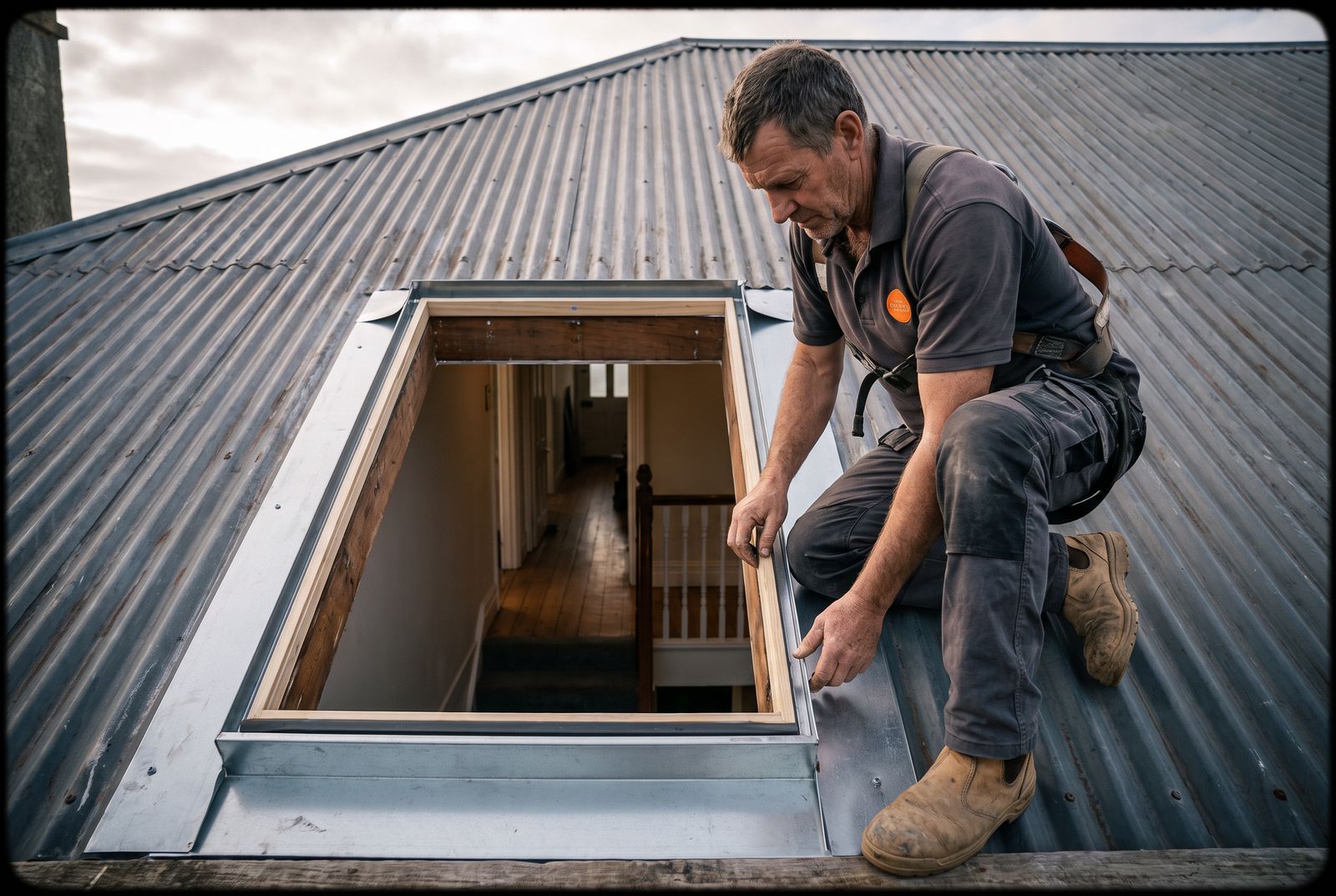
When a skylight needs attention
Skylight leaks are often blamed on the glass when the real cause is the flashing or the roofing around it. These are the signs we look for on an inspection:
- Water stains or bubbling paint on the light well or ceiling around the skylight
- Condensation that drips constantly in winter, which can be ventilation rather than a leak
- Crazed, yellowed or brittle plastic domes
- Perished seals or rotting timber frames on older units
- Sealant smeared around the upstand, a sign someone has tried a quick fix
- Debris built up on the high side of the skylight, damming water against the flashing
Types of skylight and roof window
Modern skylights are made for either pitched or flat roofs, and the two are not interchangeable. VELUX, for example, sells separate pitched-roof and flat-roof ranges, each with fixed, manually opening, electric and solar-powered models, plus tubular sun tunnels for smaller spaces such as hallways and ensuites. Opening models help clear steam and heat from bathrooms and kitchens, and electric and solar versions can close automatically when it rains.
The flashing kit has to suit your roof cladding. Standard kits are made for corrugate and tile roofs, and some retailers note they are not suitable for certain trapezoidal metal profiles. On those roofs, or on membrane roofs, the opening needs a different flashing or a purpose-built upstand. We confirm the right combination for your roof before ordering.
- Fixed skylights: maximum light, no ventilation, the simplest option
- Opening roof windows: manual, electric or solar, useful in wet rooms
- Flat-roof skylights: sit on an upstand above the membrane
- Sun tunnels: a reflective tube that brings daylight into small rooms with long roof spaces
How It Works
Installing, replacing and resealing
For a new skylight we confirm the position against the rafters or trusses inside, cut and trim the opening, fit the unit and flashing kit, turn the roofing and underlay into the flashing correctly, and line the light well. Where a new opening means cutting a structural member, the framing has to be trimmed properly and the work may need building consent.
Replacing an old unit usually means removing the existing flashing too, because a new skylight on a tired flashing is a common cause of repeat leaks. If the skylight itself is sound and only the flashing or seals have failed, a reflash can be enough. That work overlaps with our roof flashing repairs, and we will tell you honestly which option suits your roof.
Cost factors for skylights
Skylight jobs vary from a simple like-for-like swap to a new opening with a lined light well through a ceiling cavity. Your quote lists each part separately. The main factors are the product and size you choose, whether it opens and how it is powered, the roof profile and the flashing it needs, any trimming of framing, the depth and finish of the light well, and access to the roof. Adding blinds or rain sensors is also itemised so you can decide what is worth it.
Consent and safety
Building work on a roof window in an existing home can be exempt from building consent under Schedule 1, but the exemption has conditions. It does not apply to a window that was installed within the last 15 years and has failed, or to work that affects a specified system such as sprinklers or alarms. Structural changes to cut a new opening can also change the answer. We check the specifics for your house before quoting, and the roofing FAQ explains the basics.
Skylights are a fall-through hazard during roof work, and WorkSafe guidance treats openings and brittle materials on roofs as places that need edge protection or covers. We protect openings while we work, and we recommend you never walk near a skylight on your roof yourself.
Skylights in Auckland homes
Many villas and bungalows in suburbs such as Mt Albert, Epsom and Devonport have deep, dark hallways that benefit from a skylight or sun tunnel. Newer homes with flat or low-pitch roofs often have plastic domes that are reaching the end of their life. On exposed coastal and elevated sites, wind-driven rain makes the flashing detail even more important, and an opening unit with a rain sensor avoids coming home to a wet floor.
Why Choose Cheeky's Roofers for Skylights
Roofers, not just installers
We flash the skylight into the roofing and underlay properly instead of relying on sealant.
Right flashing for your profile
We confirm the flashing or upstand suits your corrugate, trapezoidal, tile or membrane roof before anything is ordered.
Honest repair or replace advice
If a reflash will fix the leak, we say so. If the unit is past it, we show you why with photos.
Openings protected while we work
Edge protection and covers keep the job safe for our team and anyone below.
Skylights FAQs
Why does my skylight leak?
Most skylight leaks come from the flashing, perished seals or debris damming water on the high side, not the glass. An inspection finds the actual entry point before anything is replaced.
Can you put a skylight in a corrugated iron roof?
Yes. Standard flashing kits are made for corrugate and tile roofs. Some trapezoidal profiles need a different flashing, which we confirm on the measure.
Do I need consent for a skylight?
Work on a roof window in an existing home can be exempt under Schedule 1, subject to conditions. A new opening that changes the structure may need consent. We check before quoting.
What warranty do skylights come with?
It depends on the brand. VELUX NZ, for example, states a 10-year warranty on skylights and flashings, 7 years on sun tunnels and 3 years on blinds and electronic components.
Is a skylight or a sun tunnel better?
A skylight suits rooms where the ceiling sits close to the roof. A sun tunnel suits small spaces with a deep roof cavity, such as hallways and ensuites. We recommend based on the room and roof.
Should I replace skylights when I re-roof?
Usually yes if they are older plastic domes or show any sign of leaking. The roof is already open, so replacement costs less than doing it later.
Skylights by Area
Local skylights information for your part of Auckland:
Related Roofing Services
Skylights Guides
See the re-roofing cost guide or every service we offer.