
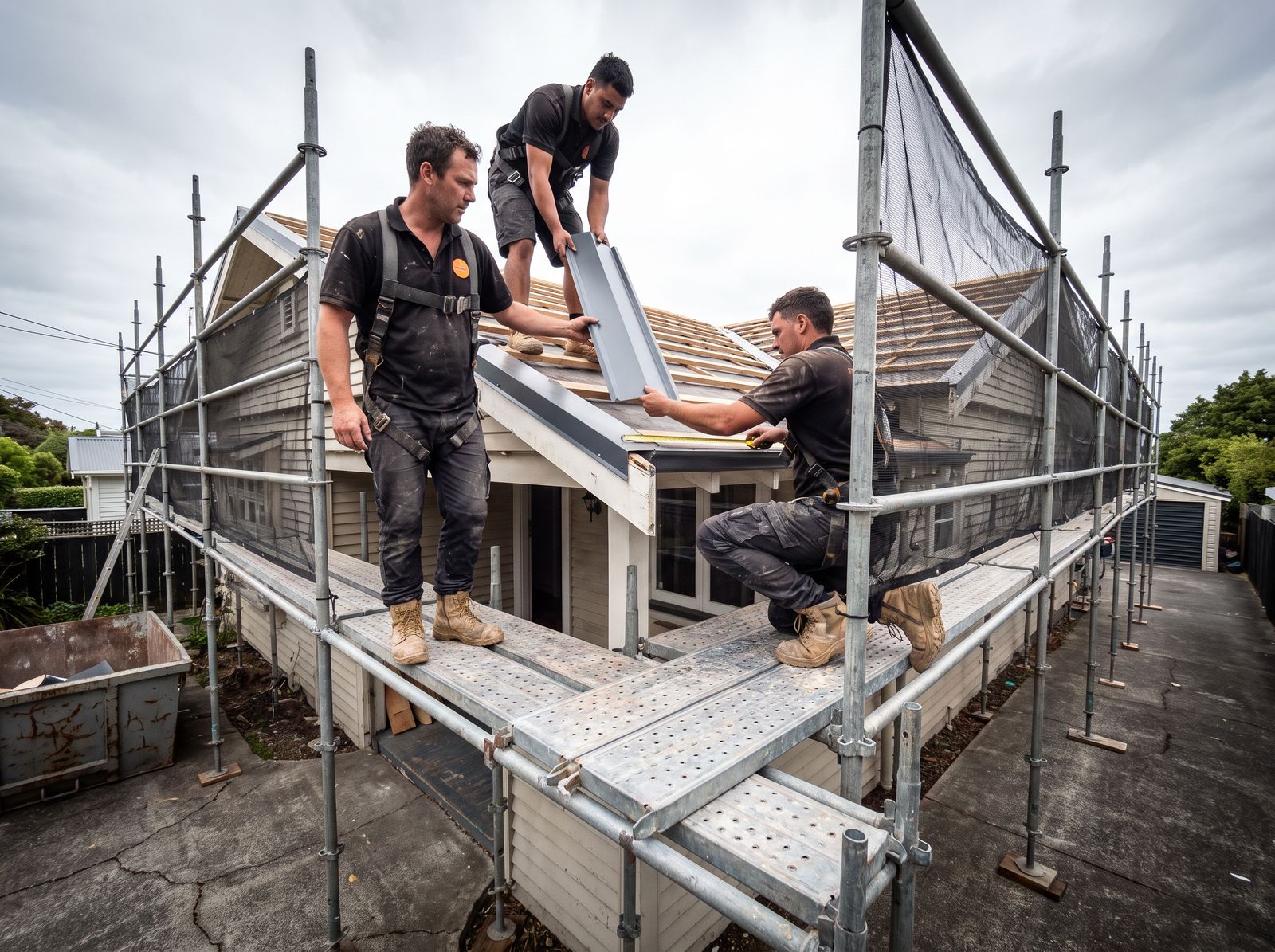
For most owners the worry is not the total number of days. It is the gap between the old roof coming off and the new one going on, and what happens if the weather turns. On a well-run job that gap is measured in hours, not days, because the roof is replaced one section at a time.
This guide walks through each stage of a reroof, what stretches the timeline, how roofers handle rain and winter, whether you need to move out and how long consent adds.
How long does it take to reroof a house?
Several working days on the roof is typical for a simple single-storey steel-to-steel reroof, with larger, steeper and more complex roofs taking longer. The exact figure depends on roof area, shape, access, what is coming off and what is found underneath.
The table shows the stages in order and what usually stretches each one. It is a sequence, not a promise of days, because two houses of the same size can differ a lot once the old roofing is off.
| Stage | What happens | What stretches it |
|---|---|---|
| 1. Scaffold and edge protection | Scaffold goes up before anyone works on the roof | Two storeys, sloping sections, tight access |
| 2. Material delivery | Steel rolled to length, flashings folded | Colour and profile availability |
| 3. Strip one section | Old roofing and fixings removed from one face | Tiles, asbestos, multiple layers |
| 4. Check timber | Purlins, battens and rafters checked and replaced | Rot at the eaves, tile battens to swap |
| 5. Underlay and new roofing | Underlay laid, new sheets fixed the same day | Wind, steep pitch, many penetrations |
| 6. Flashings and penetrations | Ridges, barges, aprons, flues, skylights | Chimneys, dormers, valleys |
| 7. Spouting and clean-up | New spouting if included, magnetic sweep, scaffold down | Fascia repairs, scaffold booking |
What happens if it rains halfway through a reroof?
On a well-run job, very little, because the roof is only opened as far as it can be closed in the same day. Underlay goes down straight after stripping, the new sheets follow, and anything still open at the end of the day is covered and secured.
Roofers watch the forecast closely and will not strip a section with heavy rain or strong wind coming. That sometimes costs a day of waiting, which is far cheaper than a wet ceiling. Ask any roofer you are considering how they close in each day and what their plan is for an unexpected shower. The answer tells you a lot about how they run a job.
Can roofing be done in the rain?
No, not safely or properly. Wet roofs are slippery, underlay should go down dry, and sealants and fixings perform best on dry surfaces, so crews stop work and close in when rain arrives.
Light drizzle on a section that is already closed in is different from stripping a roof in the rain. Work like flashing a section that is already sheeted can sometimes continue in light conditions, but no one should be opening a roof in rain. Wind matters as much as rain: long steel sheets act like sails, and coastal sites such as Orewa, where weather comes straight in off the water, can lose days to wind even when it is dry.
Want a timeline for your house?
Cheeky's Roofers measures your roof, checks access and gives you a written quote with a realistic schedule.
Can roofing be done in winter?
Yes. Auckland's mild winters mean reroofs go ahead all year, but winter jobs usually take longer because there are fewer dry, calm days and shorter daylight hours.
Booking in winter can also work in your favour: if the roof is leaking, waiting for summer means months of further damage to ceilings and insulation. If the roof is sound and you have a choice, late spring through early autumn gives the most predictable run of working days. Either way, the close-in-every-day approach is the same.
Do I need to move out during a reroof?
Usually not. Most families stay at home throughout a reroof, because the house stays closed in every night and the work happens outside.
Expect noise during strip-off, some dust from the ceiling space on older homes, and limited use of the driveway for deliveries and the skip. It helps to move cars off the driveway, take anything you care about out of the ceiling space and let neighbours know. The exception is an asbestos roof, where licensed removal sets its own rules, and your roofer should explain any restrictions before the job starts.
Access shapes the whole plan. In Devonport, narrow older streets and tight parking around the village make scaffold delivery and skip placement the first thing we work out. Our re-roofing in Devonport page covers how we plan those jobs.
How long does building consent for a reroof take?
Many like-for-like reroofs do not need consent at all. Where consent is needed, Auckland Council's standard process is 20 working days, but the clock stops whenever the council asks for more information and does not restart until that information arrives.
In practice that means a complete, clear application is the fastest route. Auckland Council also offers a faster streamline service for simple projects with high-quality applications. Changing from tile to steel, altering the structure or replacing a roof that failed early are the usual triggers for consent, and our short guide on whether you need consent to reroof covers the basics. If your job does need consent, Cheeky's Roofers prepares the roofing details and tells you the likely timing before you commit.
What makes a reroof take longer than planned?
Hidden timber damage is the most common delay. Once the old roofing is off, softened purlins at the eaves or rotten battens need replacing before the new roof can go on.
Other common causes are tile removal on a tile to metal conversion, where battens are swapped for purlins at a new spacing, asbestos that must be removed by a licensed contractor, and complex roofs with valleys, dormers and chimneys. In Glenfield, where much of the housing went up in the 1960s and early 1970s, roofs are old enough that timber at the eaves can need attention. A good quote names these possibilities and explains how they would be priced, so a delay never becomes a surprise bill. If you are weighing up a full roof replacement, ask for the timeline in writing with the quote.
The simplest way to get a realistic timeline for your own house is to book a free measure. We look at the roof, the timber we can see from the ceiling space and the access, then put a schedule in writing alongside the price, including the stages most likely to move.
Frequently Asked Questions
How far ahead should I book a reroof?
Allow time for a measure, quote, material ordering and any consent. Spring and summer fill fastest. If your roof is leaking, say so when you enquire, because temporary repairs can be arranged while the reroof is scheduled.
Will the roofers need access inside my house?
Usually only briefly, to check the ceiling space for timber condition, flues or skylight openings. Most of the work happens outside. Your roofer should tell you in advance if anyone needs to go inside.
Do I need to be home during a reroof?
Not all the time. Being reachable by phone is enough for most jobs, so the crew can confirm decisions such as replacing extra timber. Agree a contact plan and how extra work gets approved before the job starts.
What happens to my solar panels during a reroof?
They need to be removed before stripping and refitted afterwards, usually by a solar installer or electrician. Coordinate the dates early, because their availability can set the start date of the whole job.
Can the reroof and new spouting be done together?
Yes, and it often makes sense, because the scaffold is already up. Doing both together usually saves a second setup and lets the spouting colour match the new roof.
Our Services
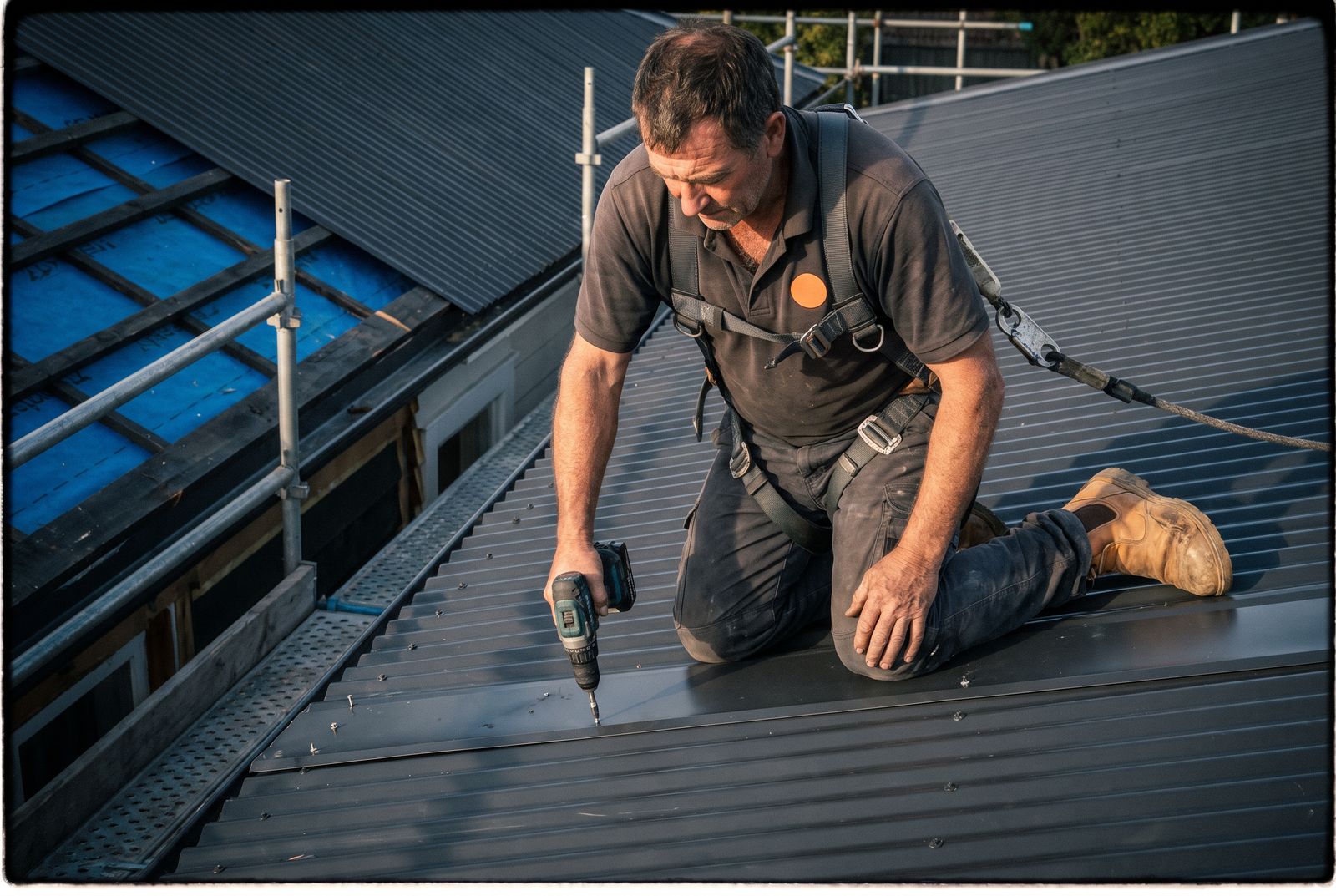 Re-RoofingA full re-roof replaces your old roofing, underlay and flashings with a new COLORSTEEL roof built to today's Building Code.
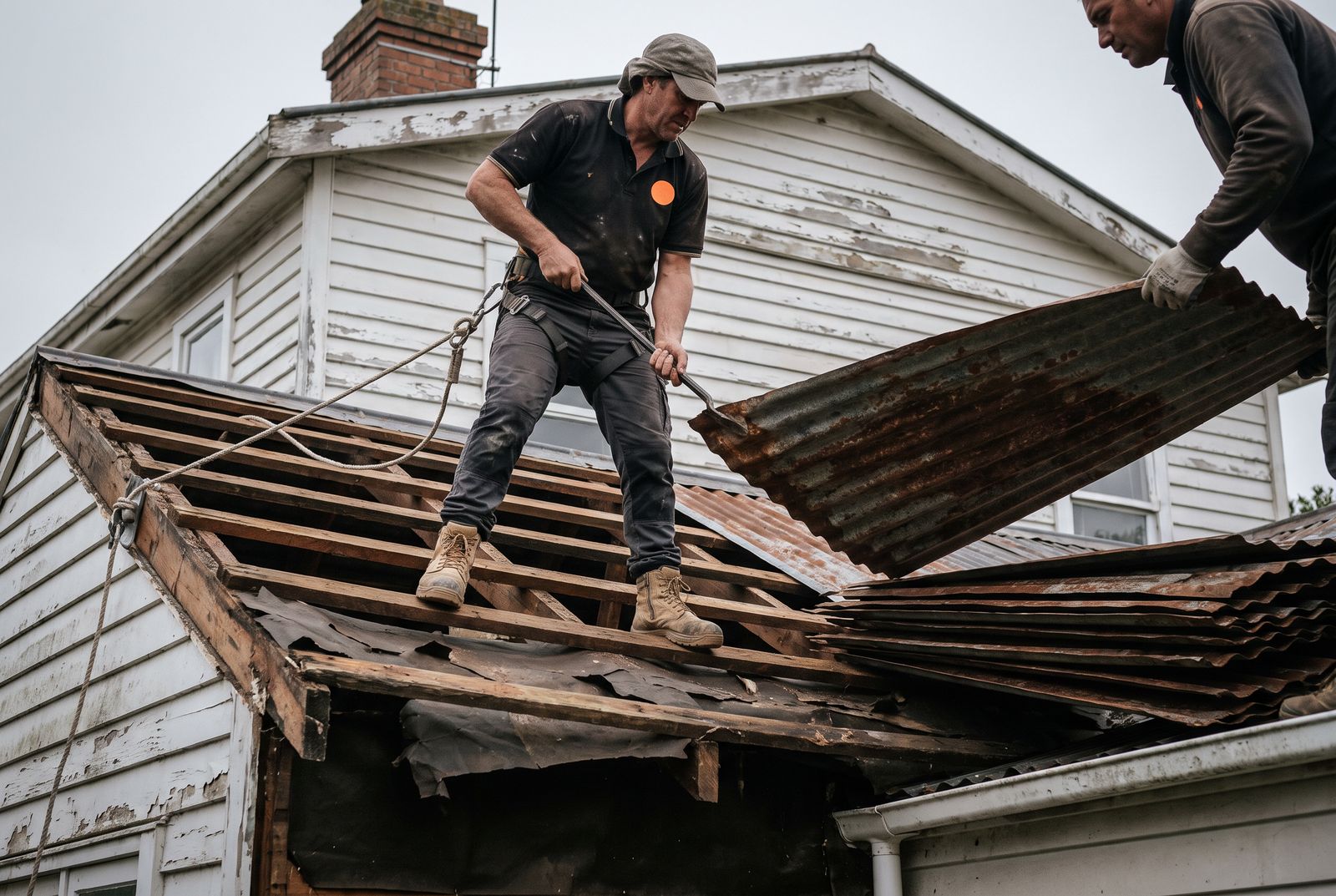 Roof ReplacementWhen repairs no longer make sense, we replace the roof completely and leave you with a roof that is good for decades.
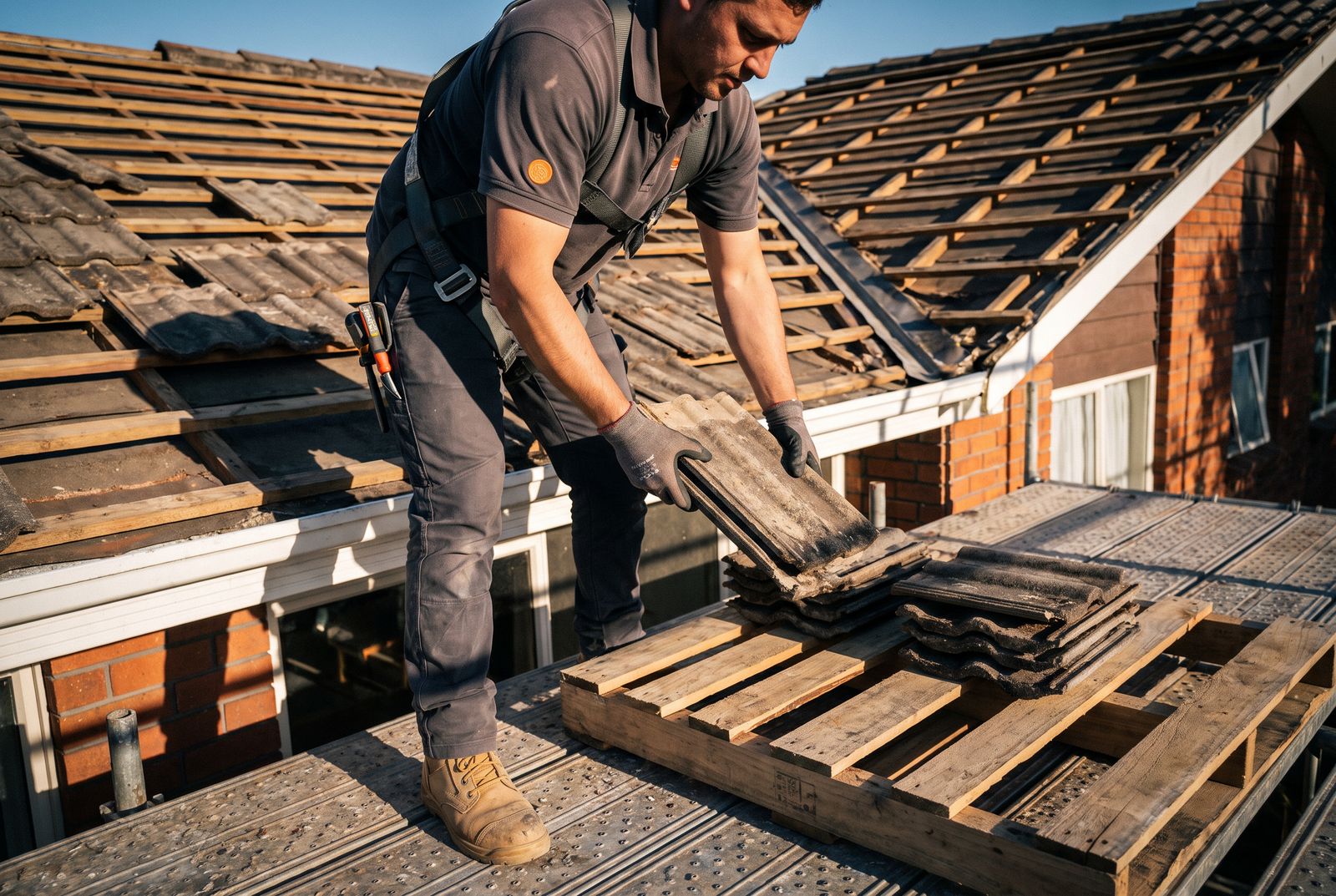 Tile to Metal Re-RoofingSwapping heavy concrete tiles for lightweight steel removes weight from the frame and ends the cycle of cracked tiles and leaks.
Read Next
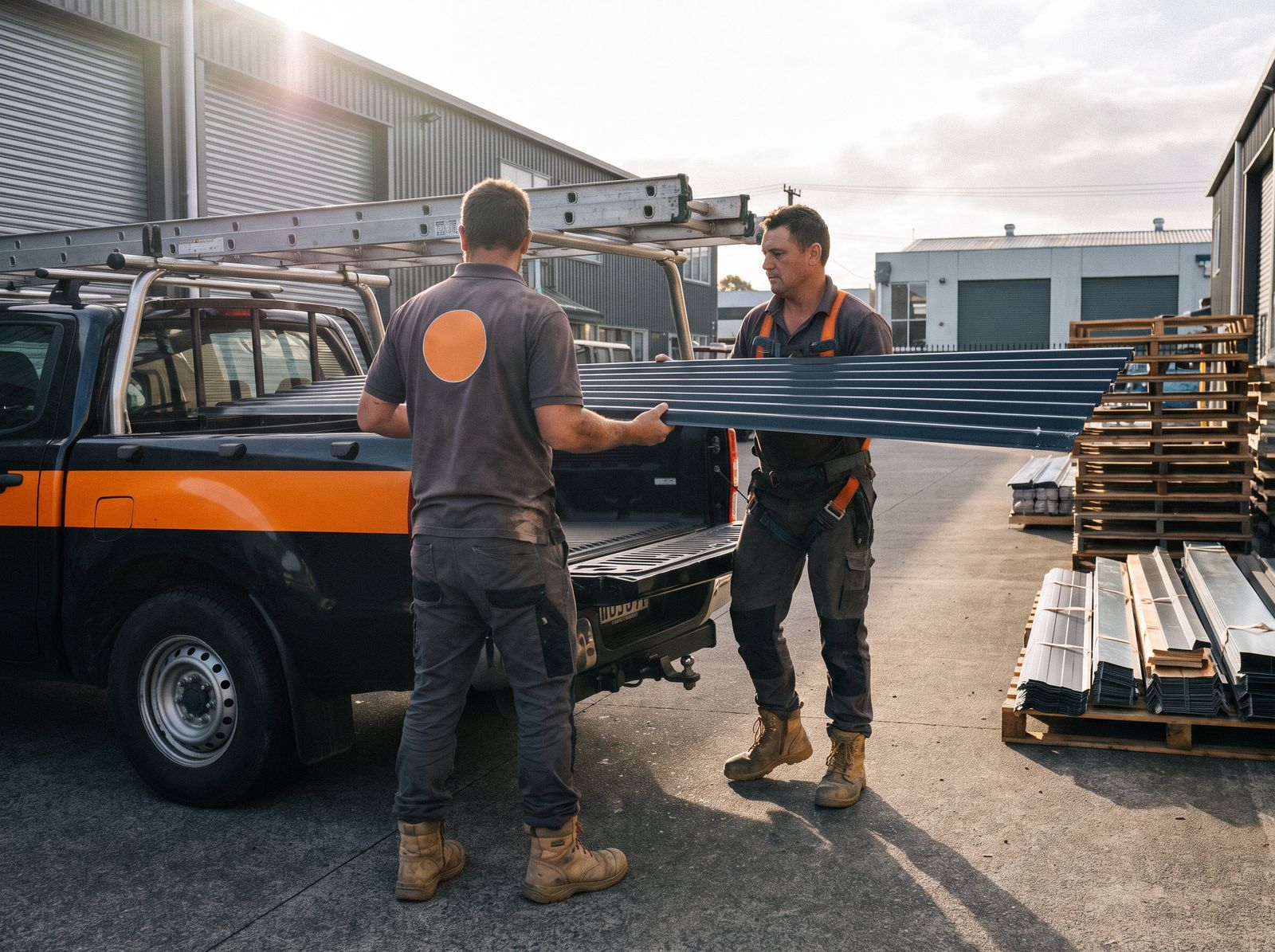
How Much Does a New Roof Cost in NZ? (2026 Price Guide)
The Made 4 Tradies rates guide (September 2026) puts Auckland re-roofing at $95 to $150 per square metre and a full re-r...
Read article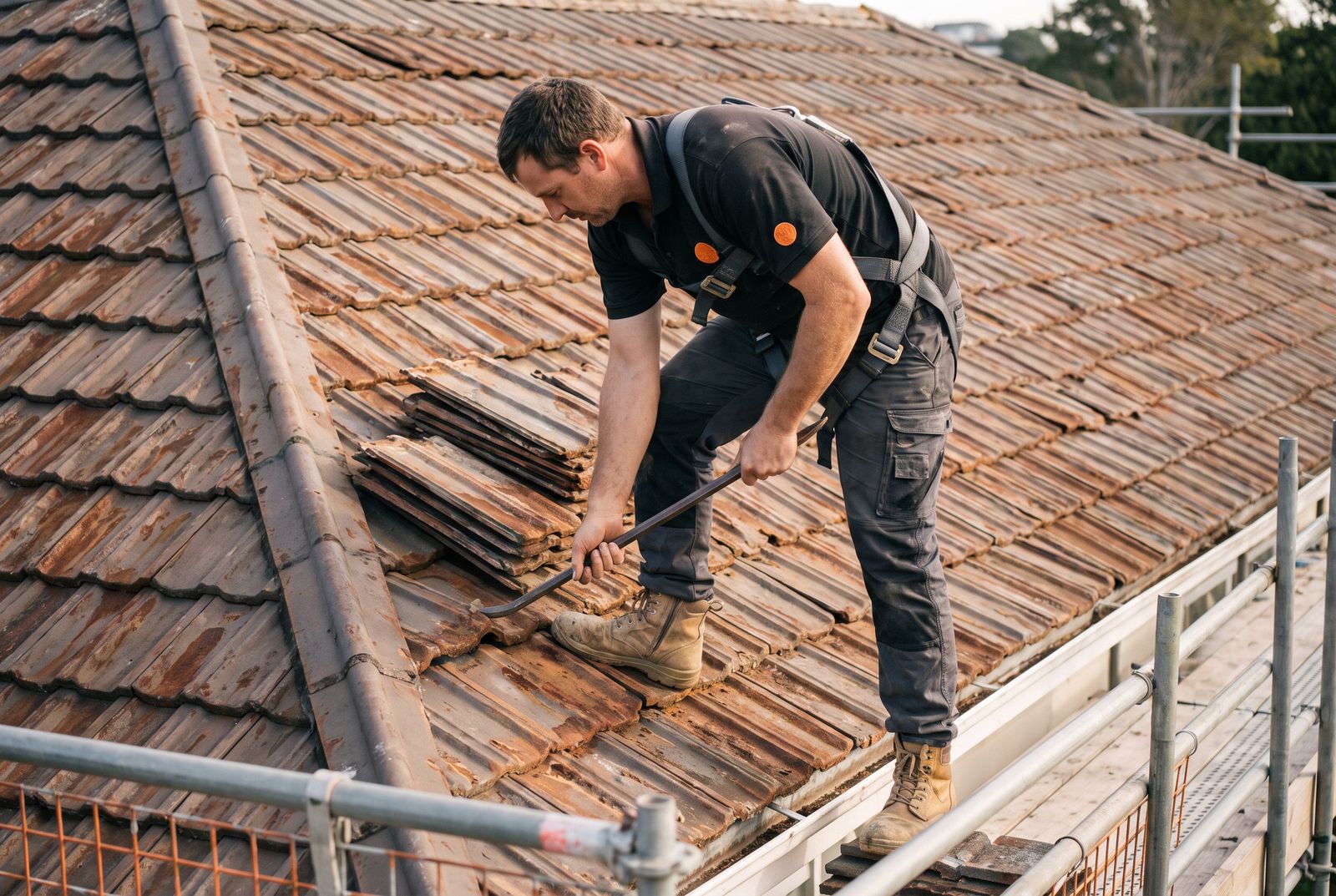
Concrete Tile vs Steel Roof: Which Is Better in NZ?
For most NZ homes replacing a roof, steel is the better choice: it is far lighter, has fewer joins for water to find and...
Read article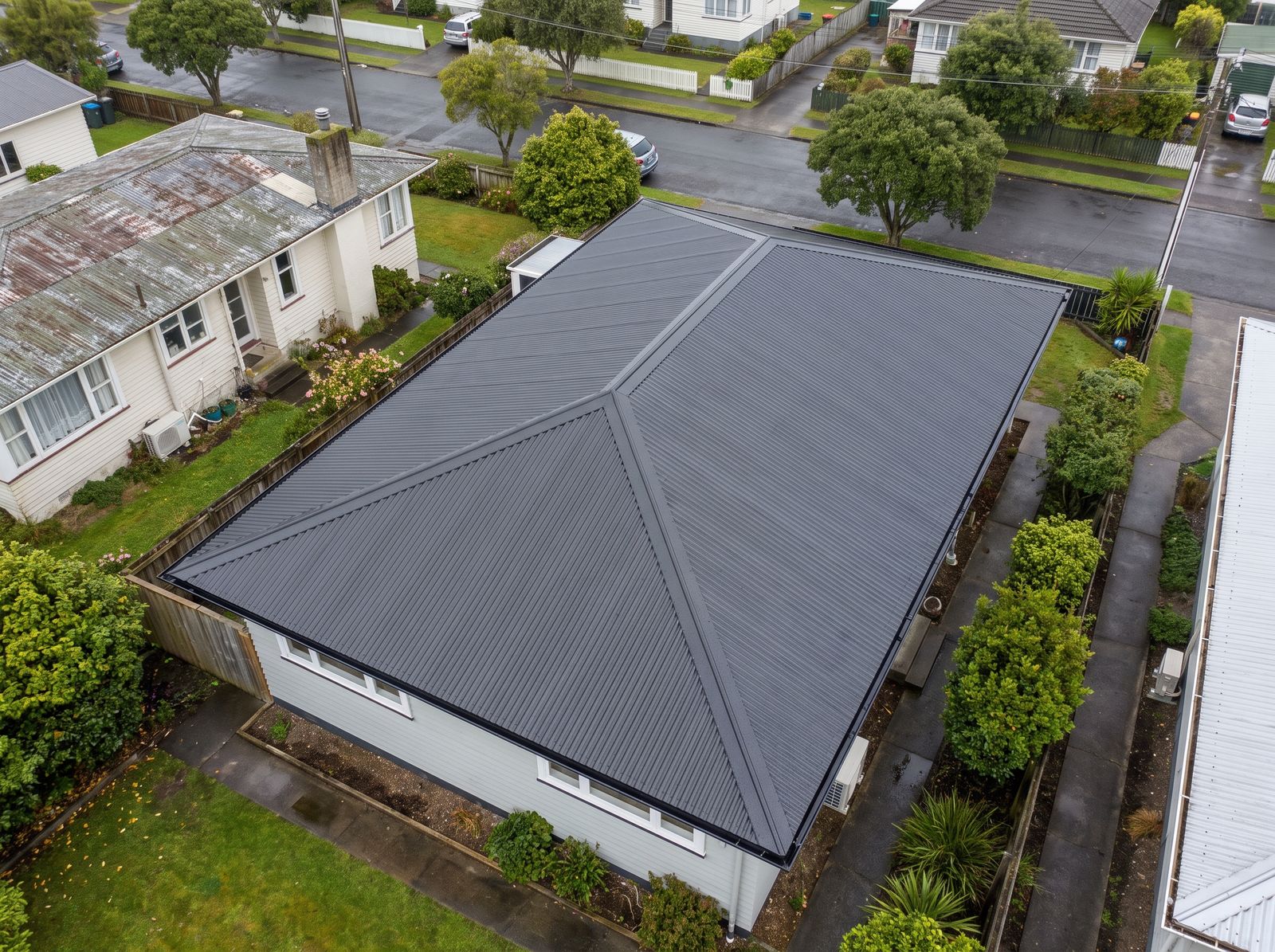
Decramastic Roofs: Lifespan, Asbestos and Replacement Options
A decramastic roof is made of pressed steel tiles with a bitumen-based coating and a stone chip finish. It fails gradual...
Read article