
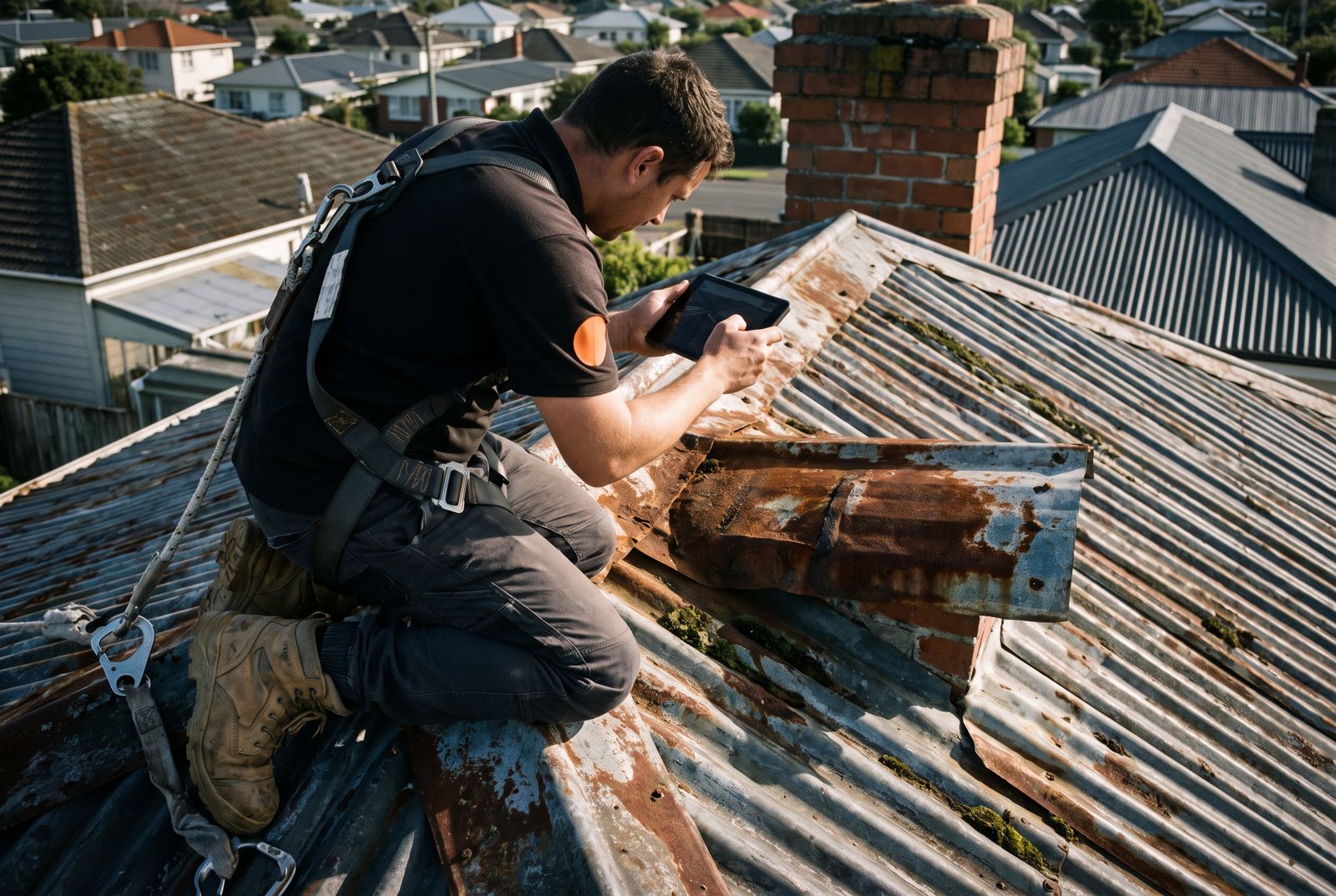
Gutter cleaning is simple work done in an awkward place. The cleaning itself takes an hour or two. The risk comes from the ladder, the roof edge and the temptation to reach just a little further.
This guide walks through a safe method, how often to do it, the signs that your gutters are telling you about something bigger, whether gutter guards are worth it and what a professional clean involves.
What is the best way to clean gutters?
Hand-clearing from a ladder, followed by a hose flush, is the most reliable method for most houses. It removes the wet sludge that blowers and vacuum wands leave behind, and the flush shows you straight away whether the water actually reaches the downpipe.
Step by step:
- Pick a dry day and check the ladder feet, rungs and locks before you climb.
- Start next to a downpipe and work away from it, so the outlet is clear first.
- Scoop debris into a bucket hung from the ladder or a bag, not onto the lawn below the window.
- Lift the outlet cover or leaf trap and clear it by hand.
- Flush the run with a hose from the far end and watch where the water goes.
- If a downpipe is blocked, feed the hose up from the bottom first before pushing anything down from the top.
| Method | Good for | Watch out for |
|---|---|---|
| Hand scoop from a ladder | Wet leaves, sludge, moss | Moving the ladder often, never overreaching |
| Gutter wand or blower from the ground | Dry leaves on single-storey runs | Leaves sludge behind, blows debris onto the roof |
| Garden hose flush | Checking flow and fall after clearing | Will not shift compacted debris on its own |
| Water blaster | Not recommended for most roofs | Damages coatings; never on asbestos roofing |
Can I clean my gutters myself safely?
On a single-storey house with firm, level ground, most fit adults can do it safely with the right ladder and a helper. Two-storey runs, steep sections and anything that needs you to step onto the roof are where it makes sense to hand the job over.
WorkSafe describes ladders as primarily a means of access for light tasks of short duration, and notes they offer no protection from a fall. Its ladder guidance also says to keep three points of contact and not to overreach: keep the centre of your torso within the stiles and both feet on the same rung. In practice that means moving the ladder every metre or so, which is slow but is the whole point.
Two extra cautions. If your roof is older fibre cement or decramastic, it may contain asbestos, and WorkSafe states high-pressure water blasting must not be used on it. And never lean a ladder against spouting itself, which can buckle or pull away from the brackets.
How often should gutters be cleaned in Auckland?
At least once a year for most Auckland homes, and every three to six months where trees overhang the roof. Late autumn, after the leaves drop and before winter rain, is the most useful time for a single annual clean.
Suburb makes a real difference. In Titirangi, houses sit among native bush that drops leaves and twigs all year, and the Waitākere Ranges bring higher rainfall, so gutters fill and overflow faster. Leafy streets in Epsom and Remuera, known for big mature trees, need more frequent clearing too. Our roof cleaning in Remuera page covers the moss and leaf issues common there.
Coastal homes have a different reason. COLORSTEEL's maintenance guidance says sheltered areas, including gutters and eaves that rain does not wash, should be cleaned regularly, with more frequent washing the harsher the environment. On the Hibiscus Coast that salt residue matters as much as the leaves.
Gutters still overflowing?
If clean gutters still spill in heavy rain, Cheeky's Roofers will check the fall, joints and downpipes and tell you what it needs.
What are the signs your gutters are blocked, or something worse?
Water spilling over the front edge in moderate rain, plants growing in the gutter, and a dry downpipe during a downpour all point to a blockage. Clear it first, then watch the next heavy shower.
If a clean gutter still misbehaves, the cause is usually one of these:
- Water pooling in the middle of a run means the gutter has lost its fall. The NZ Metal Roof and Wall Cladding Code of Practice calls for a minimum fall of 1:500, or 2 mm per metre.
- Drips at the joins mean failed sealant or corrosion at the joints.
- Overflow at the front in heavy rain on a clean gutter suggests it is undersized or short of downpipes.
- Stains or soft spots on the fascia mean water has been getting behind the gutter for some time.
- Rust spots that do not wipe off mean the spouting is reaching the end of its life.
Are gutter guards worth it?
Gutter guards are worth it under heavy tree cover, because they cut how often you need to get up the ladder. They do not make gutters maintenance-free.
Fine debris, seed pods and moss still build up on top of mesh or under some guard types, and a blocked guard can shed water over the edge just like a blocked gutter. Choose a guard made for your roof profile, make sure it can be lifted for cleaning, and check it at least once a year. On a coastal roof, ask what the mesh is made of, because some metals react with steel spouting.
How much does gutter cleaning cost?
There is no published NZ price list for gutter cleaning, but it is usually charged as a call-out plus time. The September 2026 Made 4 Tradies roofer rates guide puts Auckland roofer labour at $85 to $120 an hour and call-out fees at $160 to $320, which gives a sense of the scale for a roofer-led clean.
Price rises with height, access and the amount of debris. The value in having a roofer do it is the check that comes with it: brackets, joins, fall, fascia and the roof edge are all seen up close. When Cheeky's Roofers clears gutters we photograph anything worth watching, so you know whether you are looking at a clean, a repair or eventually new spouting.
When should you call a roofer instead?
Call a roofer when the job means standing on the roof, working at two-storey height, or when gutters overflow even after they are cleared. Those are signs of a fall, sizing or joint problem that cleaning will not fix.
If the spouting is sagging, rusted at the joins or pulling off the fascia, our spouting and gutters team can repair or replace it with a profile sized for the roof. Rotten boards behind it are handled through our downpipes and fascia work. You can book a free measure online and we will tell you honestly whether a clean is all it needs.
Frequently Asked Questions
What should I wear to clean gutters?
Sturdy shoes with good grip, gloves to protect against sharp edges and screws, and safety glasses for when you flush the downpipes. Avoid loose clothing that can catch on the ladder, and carry tools on a belt rather than in your hands.
Where should I put gutter debris?
Leaves and sludge can go in your green waste or compost. Avoid washing debris into the stormwater system, which drains to Auckland's streams and harbours. Bag it as you go rather than dropping it into garden beds below.
Can blocked gutters cause a leak inside the house?
Yes. Overflowing spouting can push water behind the fascia and into the eaves or wall framing. With internal or box gutters, an overflow can go straight into the building. A ceiling stain near an outside wall is worth checking from the gutter side.
Should I clean gutters before or after roof moss treatment?
After. Moss treatments loosen growth that then washes into the spouting over the following weeks. Clear the gutters once the treated moss has come away, or ask for both jobs on the same visit.
Do I need to clean downpipes too?
Yes, check them every time. A downpipe blocked at an elbow will make a clean gutter overflow. Flush from the top and listen for the water at the bottom; if it does not arrive, the blockage is in the pipe.
Our Services
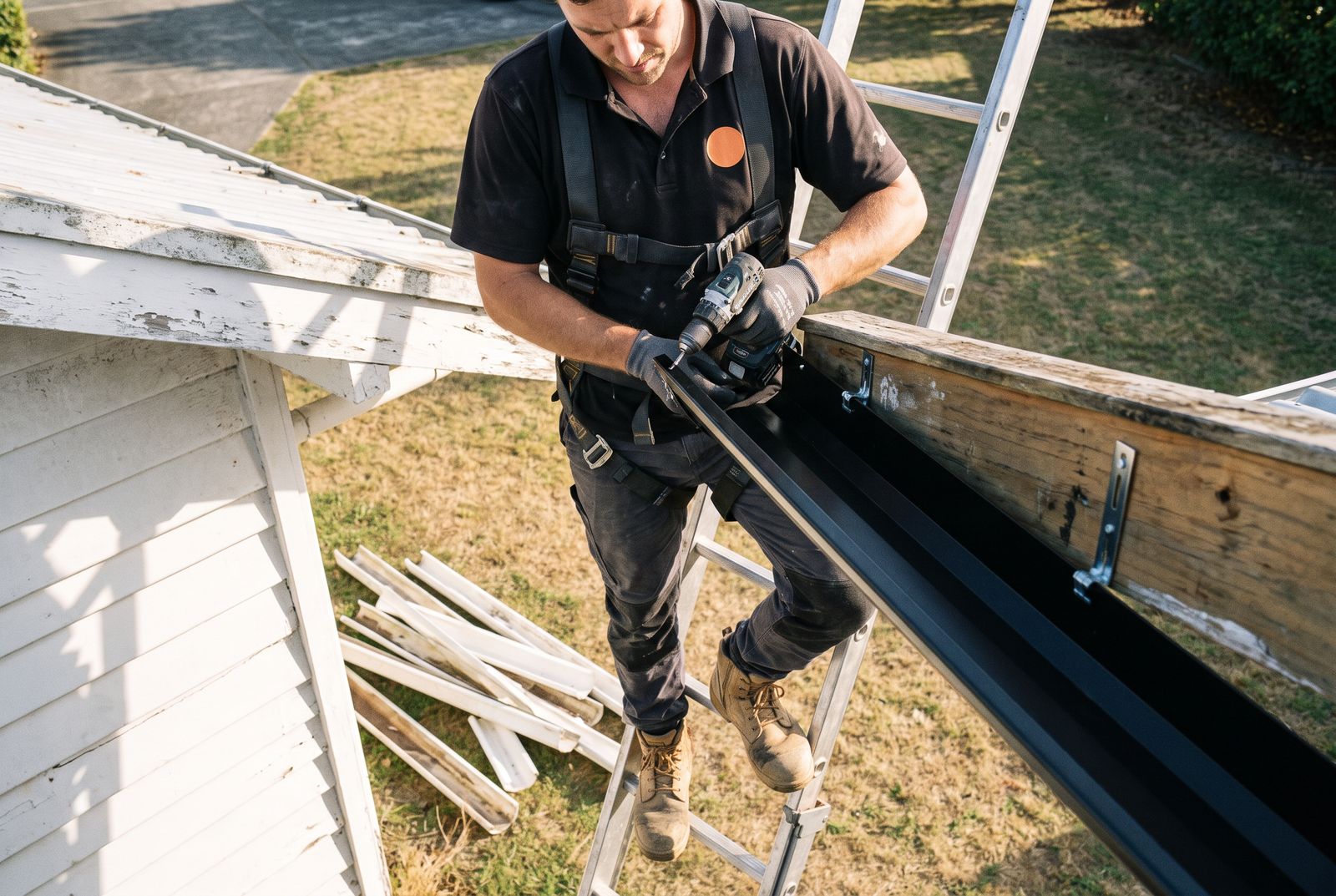 Spouting and GuttersNew spouting, gutter replacement and repairs in steel and PVC, sized to carry Auckland downpours.
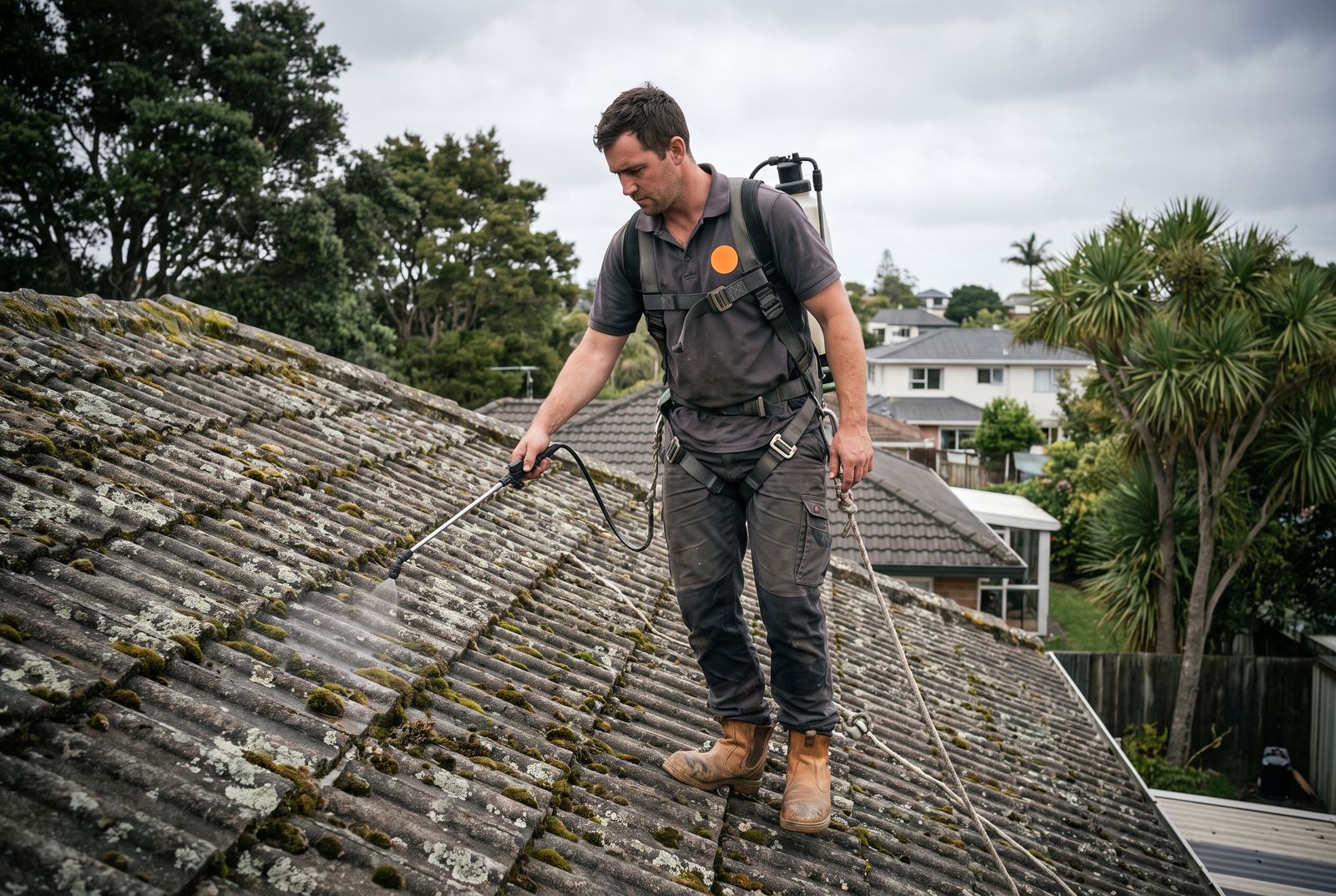 Roof WashingMoss, lichen and grime removed with the right treatment for your roof type, without damaging the surface.
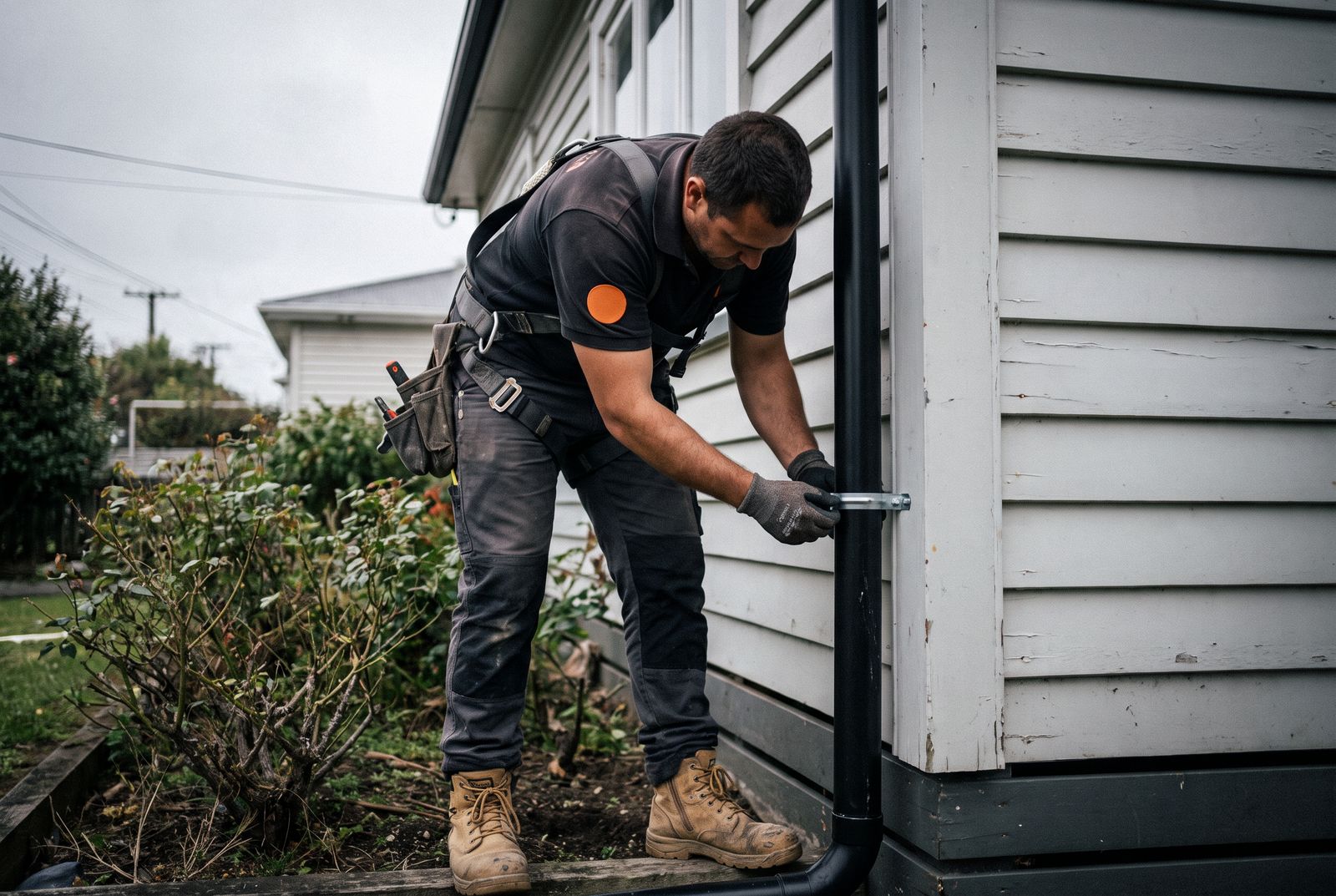 Downpipes and FasciaDownpipes and fascia replaced or repaired, often alongside new spouting or a re-roof.
Read Next
Spouting Replacement Cost in NZ: Steel vs PVC
One NZ trade rates guide puts continuous spouting and downpipes at $50 to $95 per lineal metre installed (Made 4 Tradies...
Read article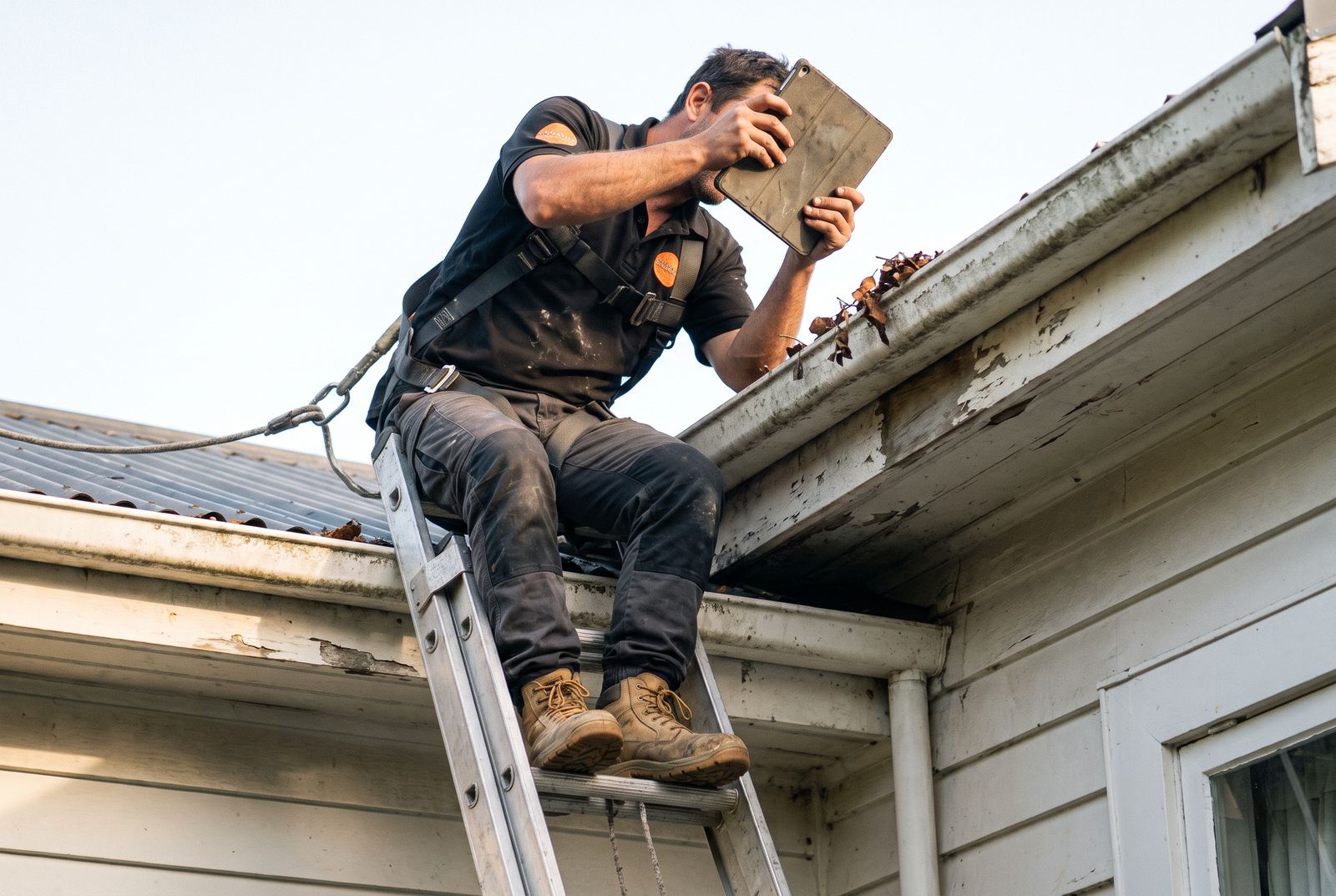
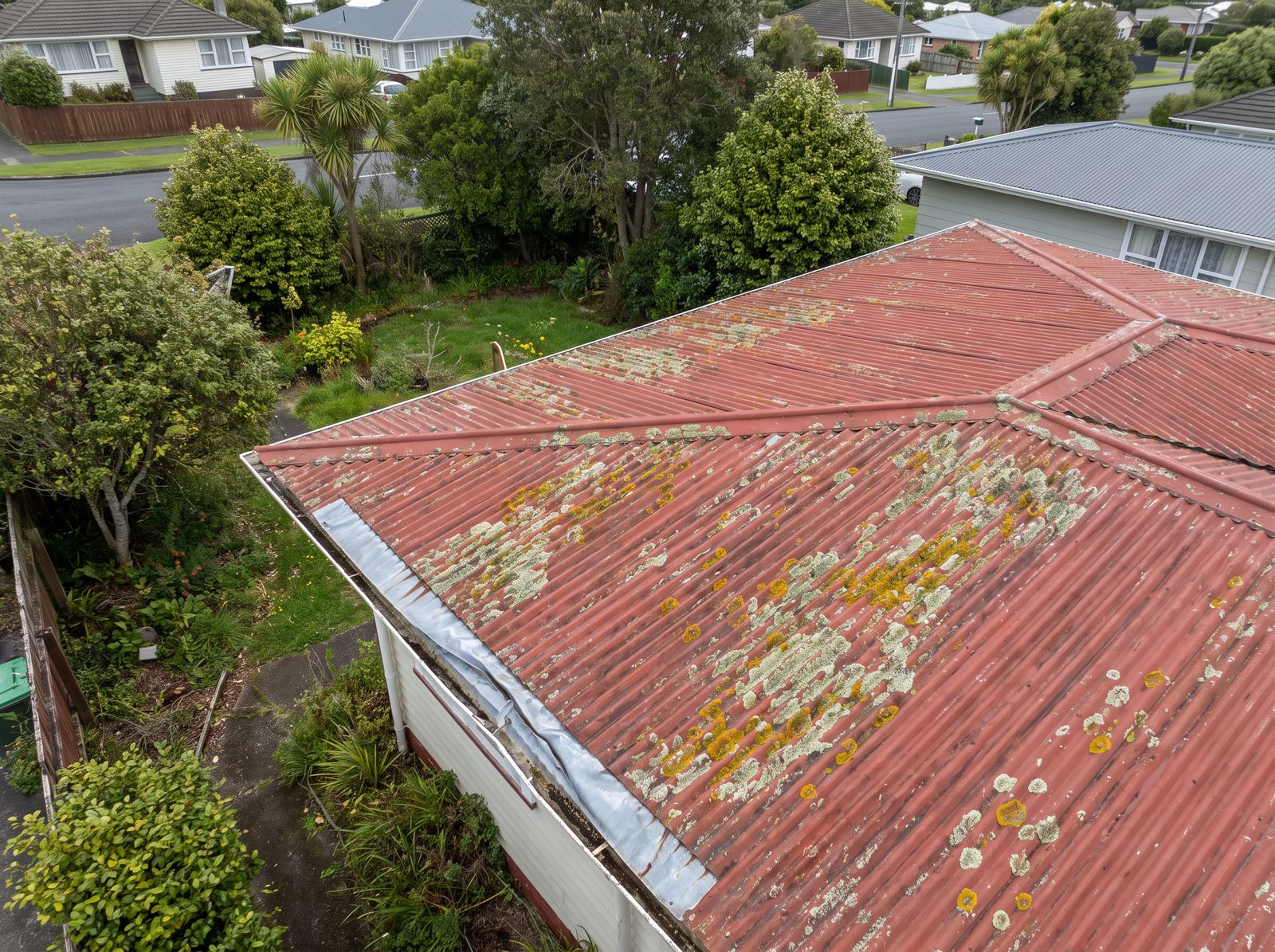
How to Remove Moss and Lichen From Your Roof (NZ Guide)
The safest way to remove roof moss and lichen is to treat, wait and rinse: spray a moss and lichen treatment suited to y...
Read article
Roof Leaking? How to Find the Source and What to Do First
If your roof is leaking, catch the water, switch off power at the switchboard if water is near lights or switches, and p...
Read articleSources
- WorkSafe: Safe working with ladders and stepladders
- WorkSafe: High-pressure water blasting should not be used to clean roofing containing asbestos
- NZ Metal Roof and Wall Cladding Code of Practice: Gutters
- COLORSTEEL: Warranty and maintenance
- Made 4 Tradies: Roofer hourly rates in New Zealand (Sept 2026)