
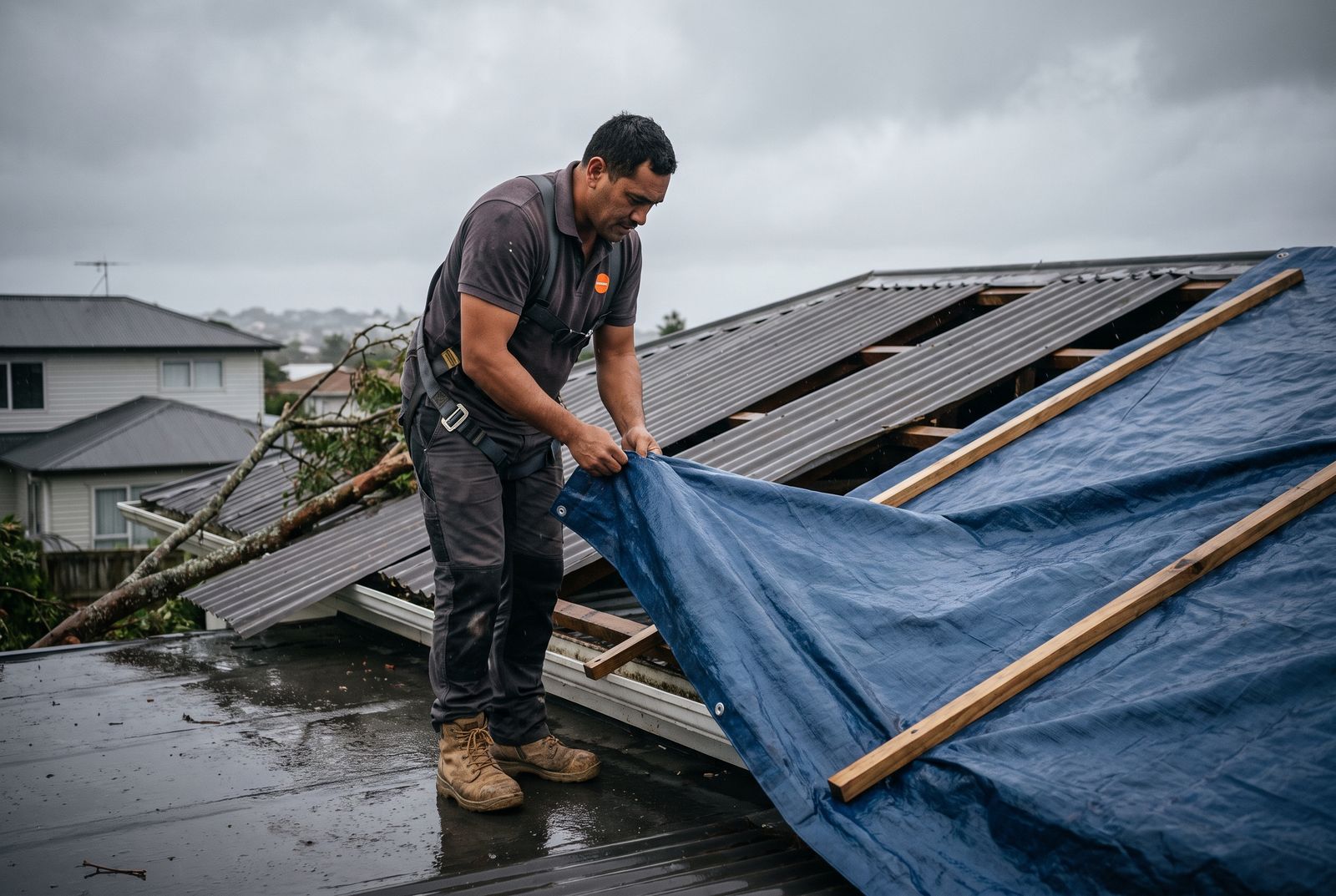
A drip through the ceiling in the middle of an Auckland downpour feels urgent, and the first hour does matter. What you do then limits the damage to ceilings, insulation and floors, and the photos you take can decide how an insurance claim goes.
This guide covers the first-hour checklist, how to trace a leak from inside the house, why some roofs only leak in heavy or wind-driven rain, what you can and cannot fix from inside, the mould risk, and how New Zealand house insurance treats roof leaks.
What should you do in the first hour?
Contain the water, make the area electrically safe and record what happened. None of these steps need you to go on the roof, and none of them should.
WorkSafe treats roof work as work at height for good reason: falls from roofs cause serious injuries every year, and a wet roof in the dark is the worst version of it. A leak can wait until morning; the steps below cannot.
- Put buckets, towels or a tarpaulin under the drip and move furniture, rugs and electronics out of the way.
- If water is coming through a light fitting or near switches, turn that circuit off at the switchboard and leave it off until an electrician has checked it.
- If the ceiling is sagging with water, keep everyone out from underneath it.
- Take photos and a short video of the ceiling, the water and anything damaged, with the date and the weather noted.
- Write down when you first noticed it. Insurers ask, and it matters.
How can you tell where a roof leak is coming from?
Work uphill from the stain. Water rarely drops straight down from where it gets in; it runs along underlay, purlins and rafters before it finds a ceiling joint to fall through, so the entry point is usually higher up the roof and sometimes several metres away.
On Auckland roofs the same few culprits turn up again and again, and most of them involve the junctions rather than the sheets themselves. Lifted, short or rusted flashings are top of the list, which is why flashing repairs make up a large share of leak work. When Cheeky's Roofers traces a leak, we check these junctions first and work outward from the roof space.
- Apron and chimney flashings where the roof meets a wall or chimney
- Valleys blocked with leaves or rusted along the gutter line
- Skylight and flue flashings that have been sealed rather than properly lapped
- Fixings that have lifted or lost their washers, especially on older iron
- Cracked or slipped tiles and ridge capping that has lost its bedding
- Spouting or internal gutters that overflow back under the roofing
How do I find a roof leak from inside the house?
Go into the roof space in daylight, ideally while it is raining or soon after, and look for the wettest point on the underside of the roofing or underlay. Take a good torch, step only on the ceiling joists, and watch for wiring and nails.
Look for dark wet patches on underlay, water tracks on rafters and purlins, rusty nail points, and tidemarks on timber from earlier leaks. Follow any trail uphill to where it starts and mark the spot. Wet insulation directly above the ceiling stain usually only tells you where the water landed, not where it came in.
If the roof space is dry but you have droplets all over the underside of the roofing on cold, clear mornings, it may be condensation, not a leak. That needs better roof ventilation and less moisture rising from the house, not new flashings. Older villas with iron laid straight onto purlins without underlay show this often.
Leak keeps coming back?
Cheeky's Roofers finds where the water is really getting in, photographs it and gives you a written fix, with a report for your insurer if you need one.
Why does my roof only leak in heavy rain?
A roof that leaks only in heavy or wind-driven rain usually has a junction that copes with normal rain but is overwhelmed when water arrives faster or sideways. Typical causes are flashings without enough cover, laps on low-pitch roofs, and gutters or valleys that overflow.
Wind matters more than people expect. E2/AS1, the Building Code's Acceptable Solution for weathertightness, sets bigger flashing covers and laps for higher wind zones and lower pitches, because wind pushes water up and under joints that would stay dry in still rain. Homes on exposed ridges in Browns Bay and the East Coast Bays take easterly rain off the Hauraki Gulf straight into their flashings.
Blocked spouting is the other big cause. In Titirangi and Glen Eden, high rainfall off the Waitākere Ranges and overhanging trees fill gutters and valleys quickly, and when they back up the water can spill inside the fascia or under the bottom of the roofing. Clearing them is cheap; the water damage is not.
Can I fix a roof leak myself from inside?
Not properly. You can manage the damage from inside, but a leak has to be stopped where water enters, which is on the outside of the roof. Sealant applied from underneath only hides where the water is going.
What you can safely do inside is catch the water, protect contents, pull back sodden insulation so it can dry, and note where the drips are. A tarpaulin over the roof is a job for someone with the right access gear and fall protection, not a ladder in the rain.
Be wary of quick fixes from outside too. Silicone smeared over a flashing joint often fails within a season and makes the real repair harder. Cheeky's Roofers traces the cause, photographs it and explains the fix before starting, and our leak repair service covers everything from a single lifted fixing to a remade apron flashing. If the leak keeps coming back, book online and we will look at the whole roof, not just the wet patch.
Can a roof leak cause mould?
Yes. Water that soaks into ceiling linings, insulation and framing and stays there gives mould the damp conditions it needs, and a slow leak is worse than a sudden one because it keeps everything wet for weeks.
Once the leak is stopped, dry the area fully. Sodden insulation rarely recovers its performance and is usually best replaced. Stained plasterboard that has softened or sagged needs replacing too, and any timber that stays dark or soft should be checked for decay. Keep the roof space and room ventilated while it dries. If mould has spread across a large area, or someone in the house has asthma or a respiratory condition, get it professionally assessed rather than scrubbing it yourself.
Will home insurance cover a roof leak in NZ?
Only if the damage was sudden. The Insurance and Financial Services Ombudsman explains that house insurance covers sudden damage and generally excludes gradual damage, and it lists ceiling damage from rain coming in through a blocked gutter as an example of gradual damage.
In practice, a storm that rips off flashings or a tree branch that punctures the roof is usually treated as a sudden event, while a leak from a rusted flashing or a worn-out roof is treated as wear and tear. The Ombudsman also points out that discovering damage suddenly is not the same as the damage being sudden: it is the cause that counts.
That is why the first-hour photos matter. Insurers rely on photographs and reports from qualified tradespeople to work out what happened, and keeping records of roof maintenance helps you show the roof was looked after. For storm damage repairs we supply photos and a written report you can pass to your insurer, and we make the roof safe first.
Frequently Asked Questions
How quickly should a roof leak be fixed?
As soon as you can get a roofer there in dry weather. In the meantime keep catching the water and drying the area. Every week a leak runs adds to the damage to insulation, linings and timber, and makes a gradual damage decline from an insurer more likely.
Should I poke a hole in a ceiling bulging with water?
Only if you are sure the power to that area is off and you can catch the water safely, and keep people from standing directly under it. If you are unsure, keep everyone clear and call a professional. A ceiling full of water is heavy and can come down without warning.
Is it a leak or condensation?
Leaks follow rain and appear in specific spots. Condensation shows up on cold, clear mornings as droplets spread across the underside of the roofing, often worst above bathrooms and kitchens. A roof inspection can tell the two apart if you are not sure.
Can a roofer find a leak when it is not raining?
Often, yes. A roofer can inspect flashings, fixings and valleys from outside and check the roof space for staining and tidemarks. Some leaks need a controlled water test, running a hose over one section at a time while someone watches inside.
Does one leak mean I need a new roof?
Usually not. Most leaks come from a flashing, fixing or penetration that can be repaired. Leaks in several places each winter, or rust through the sheets across the roof, are the stronger signs the roof is near the end of its life.
Our Services
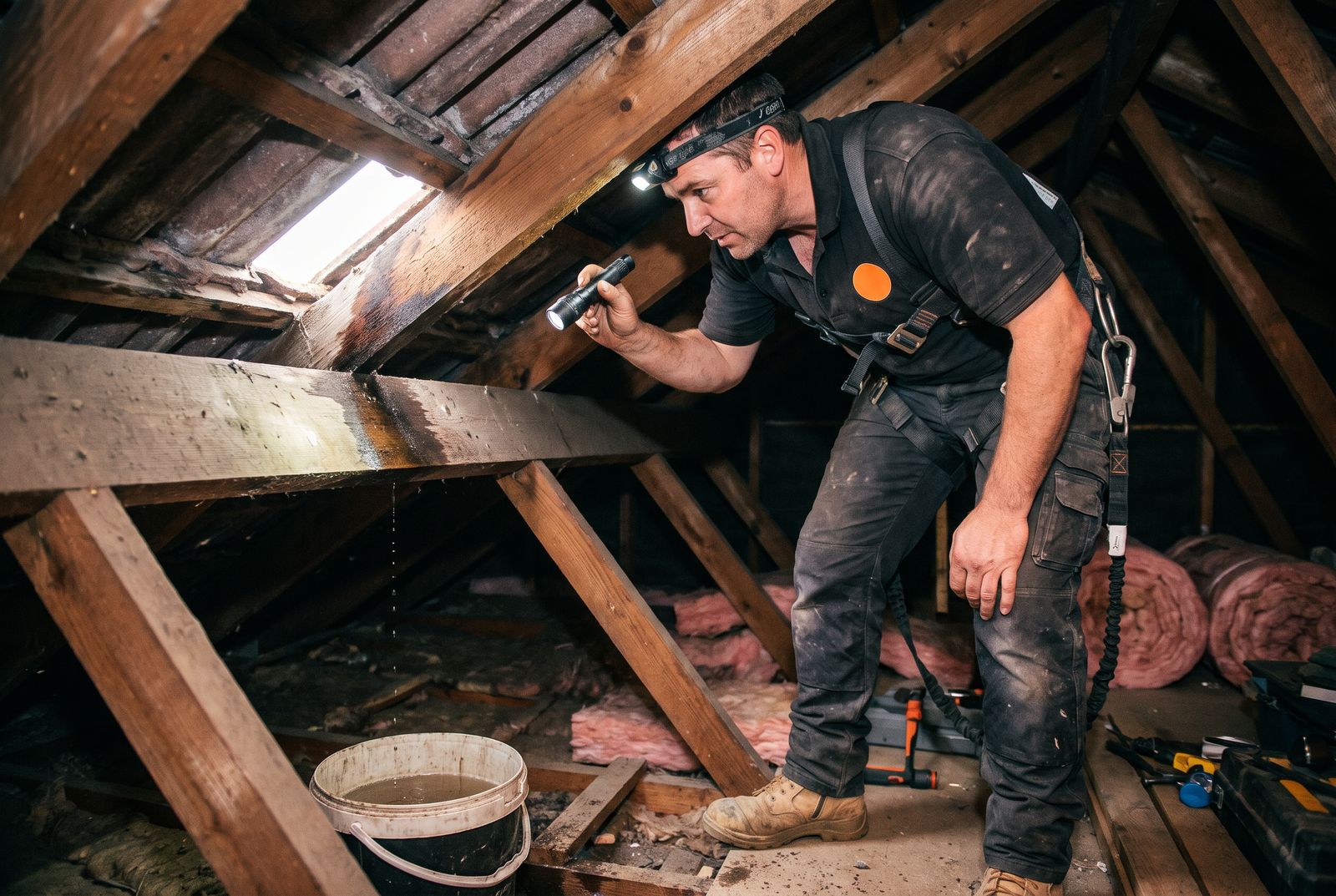 Roof Leak RepairsWe track a leak to its source, which is often nowhere near the stain on your ceiling, and fix the cause.
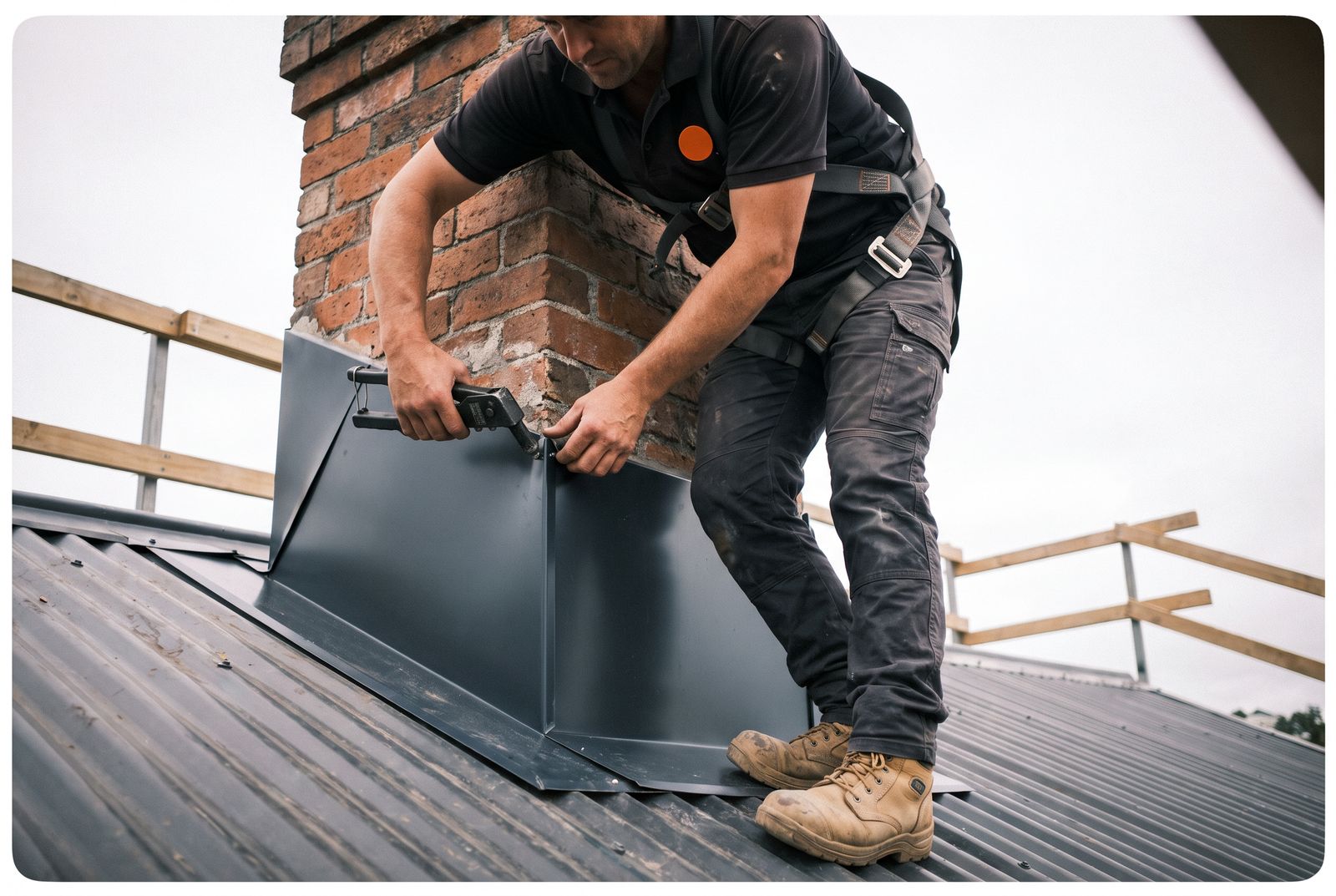 Roof FlashingFlashings around chimneys, skylights, walls and valleys cause most leaks.
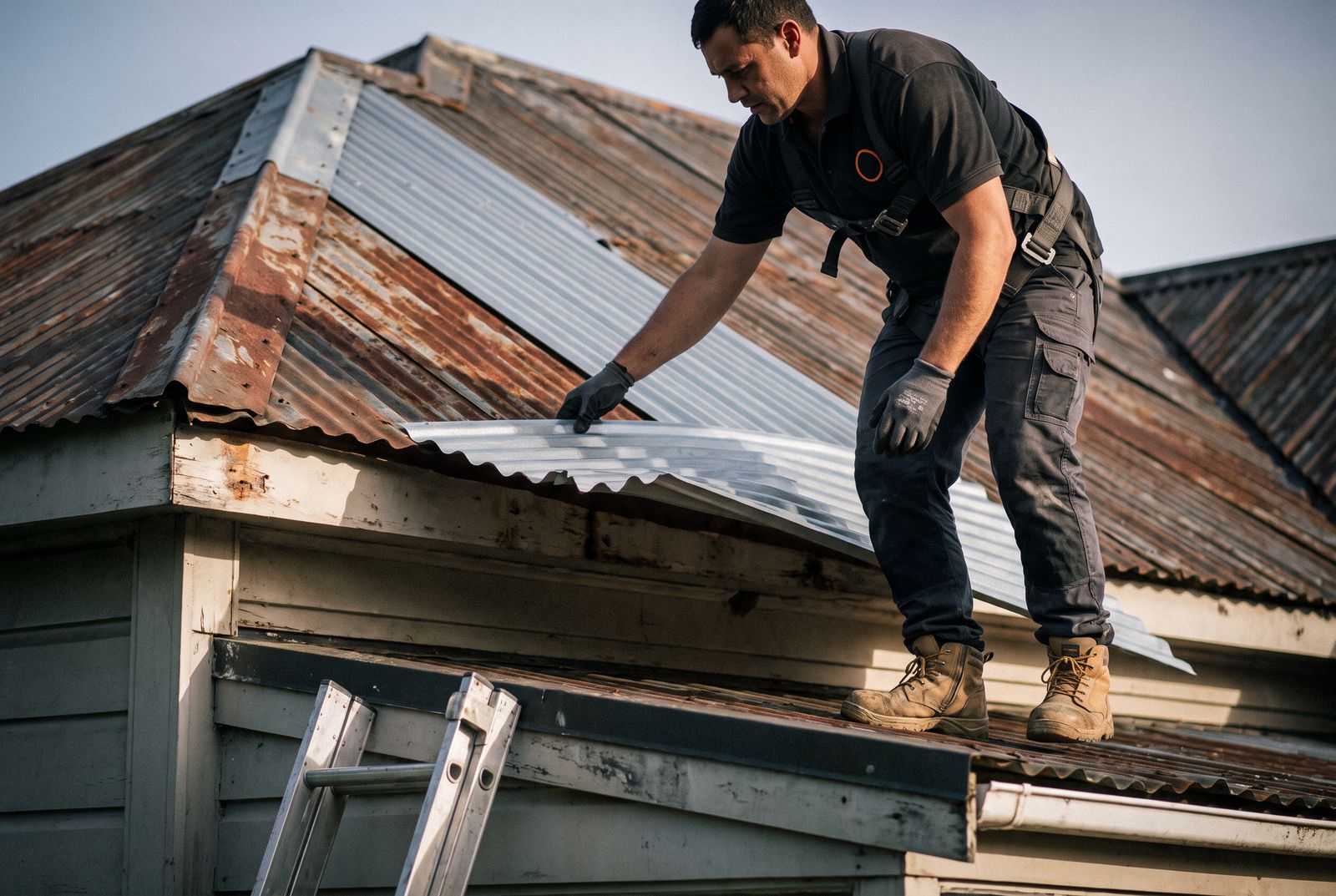 Roof RepairsLeaks, loose sheets, failed flashings and cracked tiles repaired properly, with photos of what we found and fixed.
Read Next

Roof Repair Costs in NZ: What Common Fixes Cost
Most roof repairs in NZ are priced on time and access. The September 2026 Made 4 Tradies rates guide puts Auckland roofe...
Read article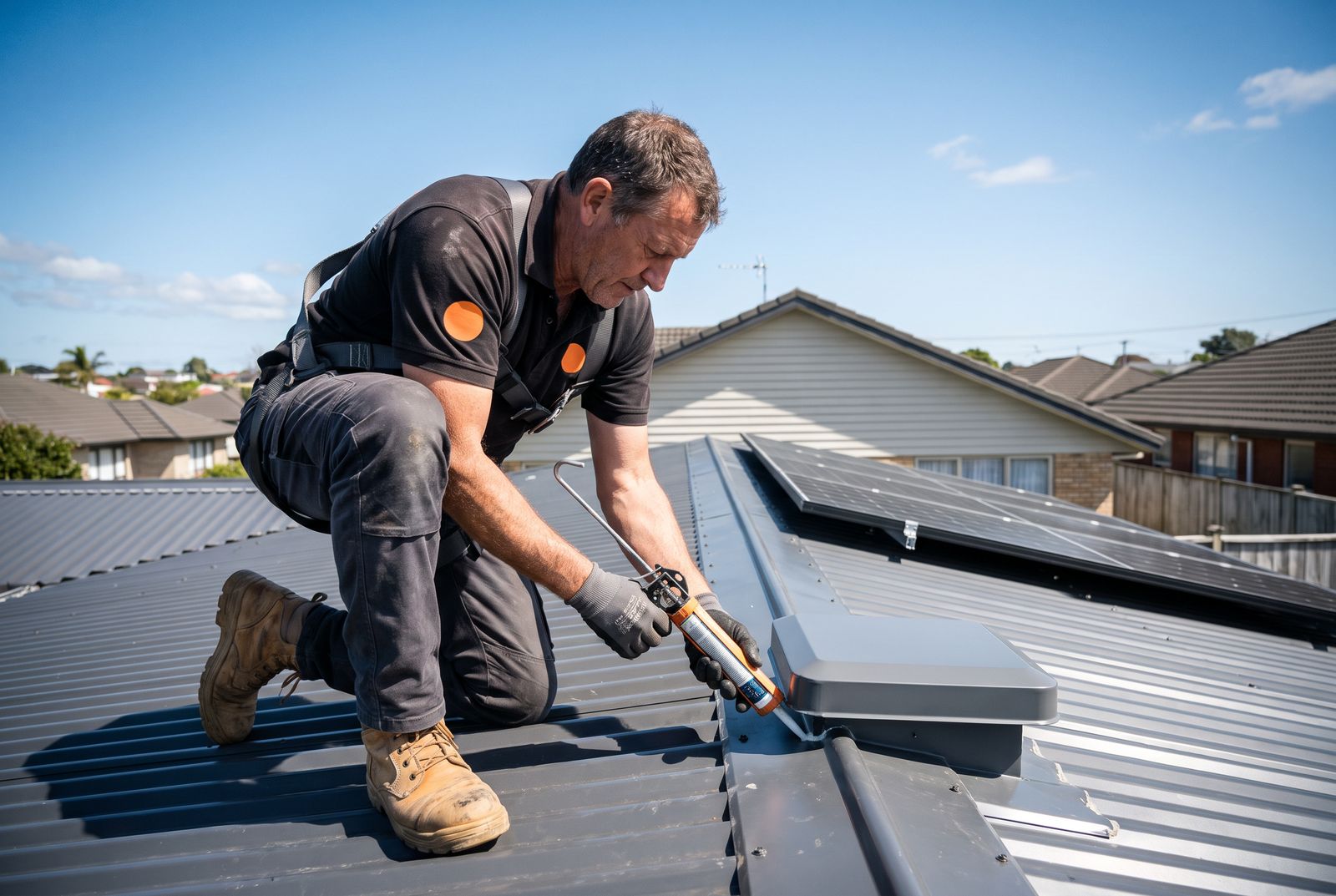
Roof Underlay in NZ: Do You Need It and Which Type?
Yes, if you have a steel roof. E2/AS1 requires roof underlay under all profiled metal longrun roofing and all metal tile...
Read article
Asbestos Roofs in NZ: How to Tell, the Rules and Removal Cost
Any roof installed before 2000 could contain asbestos, most often Super Six fibre cement sheets and some decramastic til...
Read article